Boundary Wire vs. Wire-Free: Which Setup Is Less Hassle?
An honest head-to-head on install time, repair pain, and what happens when you re-landscape.
If you’re shopping for a robot mower today, you’ve likely landed on the single biggest debate in the industry: boundary wire vs wire free mower setups. For years, the only way to keep a robot from wandering into the neighbor's pool was to bury a copper wire around the perimeter of your yard. It was tedious and physical, but it worked. Today, "satellite-guided" (RTK-GPS) or camera-based mowers are taking over the market, promising a setup that requires nothing more than a smartphone app.
The short answer? Wire-free mowers are significantly less hassle to install, but they come with their own set of technical "headaches" that boundary wires simply don't have. If you have a simple yard with wide-open views of the sky, wire-free is the winner. If you live in a forest or a narrow urban canyon, that "old-school" wire is still your most reliable friend. Here is the honest breakdown of how these two technologies actually behave in a real American backyard.
The Saturday Sacrifice: Installation Realities
Installing a boundary wire mower like a classic Husqvarna Automower or a Worx Landroid is a legitimate weekend project. You aren't just "setting it up"; you are performing light landscaping. You have to hammer down hundreds of plastic stakes or use a trenching tool to bury the wire an inch or two underground. You have to navigate around trees, flower beds, and "islands." If you have a half-acre lot, expect to spend four to six hours on your knees.
In contrast, a wire-free mower like the Segway Navimow, Mammotion LUBA, or the Ecovacs Goat G1 feels like magic at first. You plug in a base station, perhaps mount a small antenna (RTK) on your roof or a pole, and then use your phone like a remote-control car to drive the mower around the edge of your lawn. The mower "memorizes" the map. This usually takes 30 to 45 minutes. On pure speed of installation, the wire-free mower wins by a landslide.
The "Oops" Factor: Repairs and Reliability
The biggest criticism of the boundary wire is that it can break. Whether it’s an over-ambitious aeration job, an edge-trimmer mishap, or a hungry gopher, a broken wire kills the system. Finding that break is a notorious pain in the neck, often requiring a specialized "wire breaker" tool and a lot of patience.
However, once a wire is in the ground and intact, it is 100% reliable. It doesn't care if it’s cloudy, it doesn't care if your oak trees have thick leaves, and it doesn't care if you live next to a tall brick wall.
Wire-free mowers have the opposite problem. They don't break physically, but they can "break" digitally. Models that rely on RTK-GPS (like the Mammotion LUBA or Anthbot Genie) need a clear line of sight to the sky. If the mower drives under a thick tree canopy or too close to a two-story farmhouse, it might lose its signal and stop dead. This is "tech hassle" vs "physical hassle." You might find yourself frustrated that your expensive robot is "searching for signal" instead of cutting the grass.
Handling the Changing Landscape
Americans love to change their yards. We add fire pits, we expand flower beds, and we decide that "maybe a vegetable garden would look good over there."
This is where the boundary wire vs wire free mower debate gets lopsided:
- With a wire: You have to dig up the old wire, splice in new wire, and re-bury it to accommodate the new flower bed. It’s an Afternoon Project.
- With wire-free: You open the app, delete the "zone," and drive the mower around the new perimeter. It’s a Five-Minute Project.
If you are the type of homeowner who views your yard as a work in progress, a wire-free model like the EcoFlow Blade or Segway Navimow is almost certainly worth the extra cost. The flexibility to re-map your yard in minutes is one of the greatest quality-of-life improvements in outdoor power equipment in the last decade.
The Cost of Entrance
There is no getting around the price tag. Generally speaking, boundary wire mowers are the "budget" entry point. You can find a decent Worx Landroid for well under the entry-level tier because the "smarts" are in the wire, not the mower's brain.
Wire-free mowers require sophisticated GPS modules, cameras, and onboard processing power. These units typically start in the low four figures and can easily climb toward the the premium tier range for high-end models that handle large acreage. You are paying a premium for the convenience of not digging a trench, and for the advanced navigation that allows for those satisfying, straight-line mowing stripes rather than the "random bounce" pattern of older wired units.
Which One Is Actually Less Hassle?
To decide which is less hassle for you, look up at your trees.
The Golden Rule: If you can stand in the middle of your yard and see at least 70% of the open sky, go wire-free. The time you save on installation and future landscaping changes is massive.
If, however, your yard is a "cathedral of oaks" or you have a narrow side-yard between two tall houses, a wire-free mower might be a constant source of connectivity alerts on your phone. In that specific case, the physical hassle of a one-time wire installation is better than the emotional hassle of a mower that gets "lost" every Tuesday.
Current trends are moving heavily toward vision-based systems (like the Eufy S1 Pro or the Ecovacs Goat) which use cameras to "see" where they are, reducing the reliance on GPS. As this tech matures, the "hassle" of wire-free mowers will continue to drop, likely making boundary wires a relic of the past within the next few years.
Bottom Line
If you hate DIY projects and have a relatively open yard, a wire-free mower is the clear choice for a low-hassle life. But if you have a complex, heavily wooded lot, the old-fashioned boundary wire remains the only "set it and forget it" solution that won't lose its way when the clouds roll in.---
Best Wire-Free
Read now →Mowers mentioned
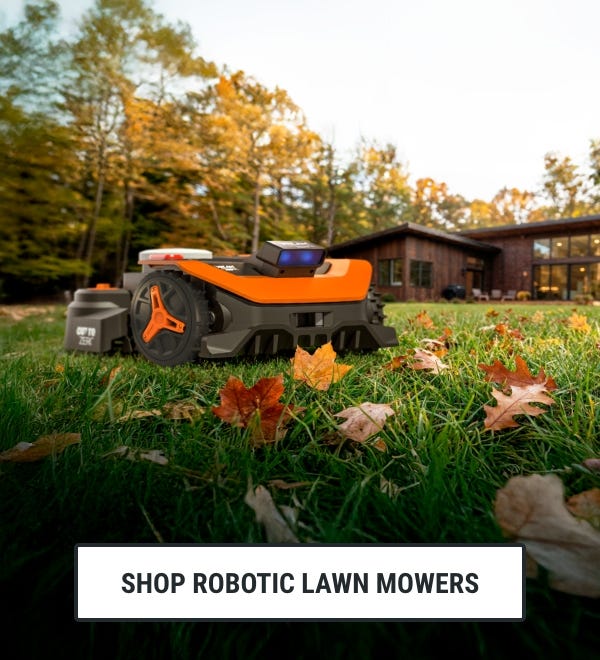
WORX Landroid L WR155
- Coverage
- ~0.5 acre (≈22,000 sq ft)
- Max slope
- ~20° (≈35%)
- AWD
- No
If you can stomach an afternoon of laying boundary wire, the WORX Landroid L WR155 is the most square footage per dollar you'll find from a name-brand mower.
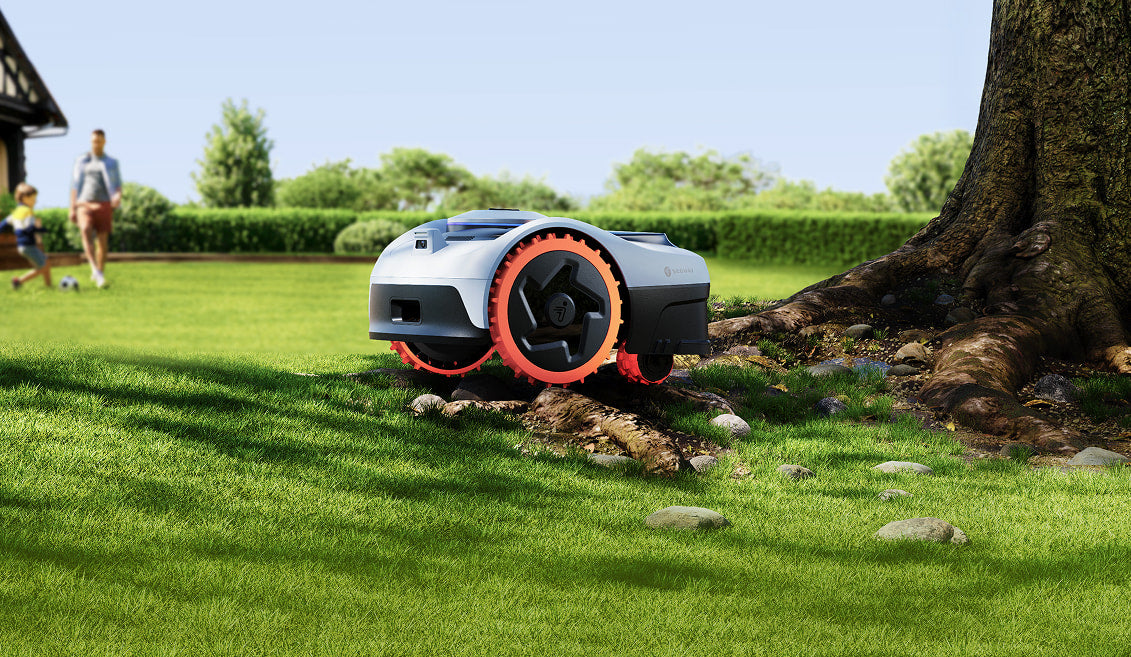
Navimow i108E
- Coverage
- ~0.2 acre (≈8,700 sq ft)
- Max slope
- ~24° (≈45%)
- AWD
- No
If your lawn is up to about an eighth of an acre and you want the simplest wire-free experience on the market, the i108E is hard to beat.
Related guides
- Robot Mower vs. Gas Mower: 5-Year Cost Comparison
Up-front cost, fuel, oil, blades, electricity, and your time — all the line items, all the math.
- Wire vs. RTK GPS vs. Vision: Which to Buy
Three navigation systems, three trade-offs. A plain-English breakdown of which one fits your yard.
- Segway Navimow vs. Mammotion LUBA: Which Wire-Free Wins?
Two of the biggest wire-free brands, head to head on coverage, slope, app polish, and value.
- See our full ranking of the best robot mowers →