Robot Mower Battery Life & Replacement Cost
Cycle life, calendar life, what really kills lithium packs, and what you'll pay to swap one in year 4.
If you are tired of pushing a heavy gas mower through July humidity, the promise of a robot mower is intoxicating. But after you get past the initial sticker shock of the unit itself, the next logical question follows: how long until the heart of the machine—the battery—gives out? It is the most expensive wear-out component in the mower, and unlike a set of blades, you can’t sharpen it back to life.
The short answer is that you can expect a quality lithium-ion robot mower battery life to span between three and five years of active service. This isn’t a guess; it’s a limitation of chemistry. While some high-end units might stretch to six years with baby-soft treatment, and some budget units might peter out by year two, the four-year mark is the sweet spot where most owners start contemplating a replacement.
Cycle Life vs. Calendar Life
To understand how long your battery will last, you have to look at two different clocks running simultaneously: cycles and years.
Most "smart" mowers from brands like Husqvarna or Segway use lithium-ion (Li-ion) cells. These cells are generally rated for about 500 to 1,000 full charge cycles before their capacity drops below 80% of what it was when new. If your mower is scheduled to run every single day, hitting its charging station twice an afternoon, you are burning through your "cycle budget" much faster than a neighbor who only runs their mower three times a week.
Then there is calendar life. Even if you never turned the mower on, the internal chemistry of the battery degrades over time. Exposure to extreme heat is the primary catalyst here. A mower sitting in 95-degree direct sunlight on a charging pad all afternoon is aging much faster than one tucked into a shaded "garage" or a cool basement during the off-season.
What Actually Kills a Lithium Pack?
It is rarely a sudden "death." Instead, you’ll notice your robot mower battery life begins to dwindle in the form of shorter run times. Where the mower used to cut for 90 minutes, it now hobbles back to the base after 45. Eventually, it won't have the juice to make it back to the charger at all, leaving it stranded in the middle of your lawn like a confused turtle.
Aside from natural aging, three things accelerate this decline:
- Deep Discharges: Running a battery down to 0% is stressful. Most modern firmware (like that in the Mammotion LUBA or Segway Navimow) prevents this by forced-docking at 15-20%, but storage is where the danger lies.
- Winter Neglect: If you leave your mower in an unheated shed in Minnesota with a 5% charge, the cold and the natural "self-discharge" can drop the voltage so low that the Battery Management System (BMS) permanently locks the pack for safety. At that point, it's a brick.
- Heat Cycles: Charging a battery while the cells are still hot from a long mow in the sun is the fastest way to degrade the internal components.
Replacement Costs: What to Expect in Year 4
When the time comes to swap the pack, the price tag depends largely on the "openness" of the brand's ecosystem.
For DIY-friendly brands like Worx Landroid, the cost is relatively low. Since they use the same 20V PowerShare batteries found in their drills and leaf blowers, you can often find a replacement at a big-box hardware store for well under a couple hundred dollars.
However, for integrated systems like the Husqvarna Automower or the high-capacity packs found in the Mammotion LUBA 2, you are looking at proprietary parts. For a standard residential robot, expect the part itself to land in the a modest amount range. If you have a professional-grade unit or a high-acreage model with a massive battery bank, that price can climb toward the mid-to-high triple digits.
If you aren't comfortable opening the chassis (which often requires replacing a waterproof gasket to maintain the seal), you’ll also be paying for 30 to 60 minutes of shop labor at a local dealer.
Comparing the Major Players
Different brands approach battery management with varying degrees of success. Here is how the landscape looks right now:
- Husqvarna Automower: They have the longest track record. Their battery management software is conservative, often leading to a very stable five-year lifespan.
- Worx Landroid: The ultimate in convenience. If the battery dies, you pop it out like a cordless drill battery. No tools required.
- Segway & EcoFlow: These newer, tech-forward entries often use high-density cells. Since many of these models go without perimeter wires (using GPS/RTK), they use more power for processing and signal maintenance, which can slightly reduce total run-time per cycle compared to "dumb" mowers.
- Mammotion (LUBA/Yuka): These units carry massive batteries to handle steep hills and large acreages. While they last a long time on a single charge, the replacement cost will be higher simply due to the sheer volume of lithium inside.
How to Double Your Battery's Life
You can't stop chemistry, but you can slow it down. If you want to maximize your robot mower battery life, follow these three rules:
- The 50% Winter Rule: Never store your mower for the winter at 100% or 0%. Charge it to about 50-60%, then turn the main power switch off. Bring the mower (or at least the battery) into a climate-controlled space.
- Shade is Key: If your charging station is in direct afternoon sun, buy or build a small roof for it. Keeping the unit cool while it's fast-charging will save months of life.
- Don't Over-Mow: If your lawn only needs two mows a week to stay tidy, don't set the schedule to seven days a week. Fewer cycles equals more years of service.
Bottom Line
Expect to replace your robot's battery every 4 years at a cost ranging from the low hundreds for DIY brands to around the a few hundred dollars mark for premium proprietary packs. It is a predictable maintenance cost that, when amortized, is still significantly cheaper than the annual oil, filters, and spark plugs required for a gas mower—and much quieter, too.
Buying Guide
Read now →Mowers mentioned
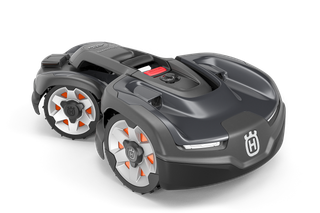
Husqvarna Automower 415X
- Coverage
- ~0.4 acre (≈17,000 sq ft)
- Max slope
- ~22° (≈40%)
- AWD
- No
Boring in the best way. Husqvarna's 415X has been polished over a decade of Automower releases — set it up once and it runs for years.
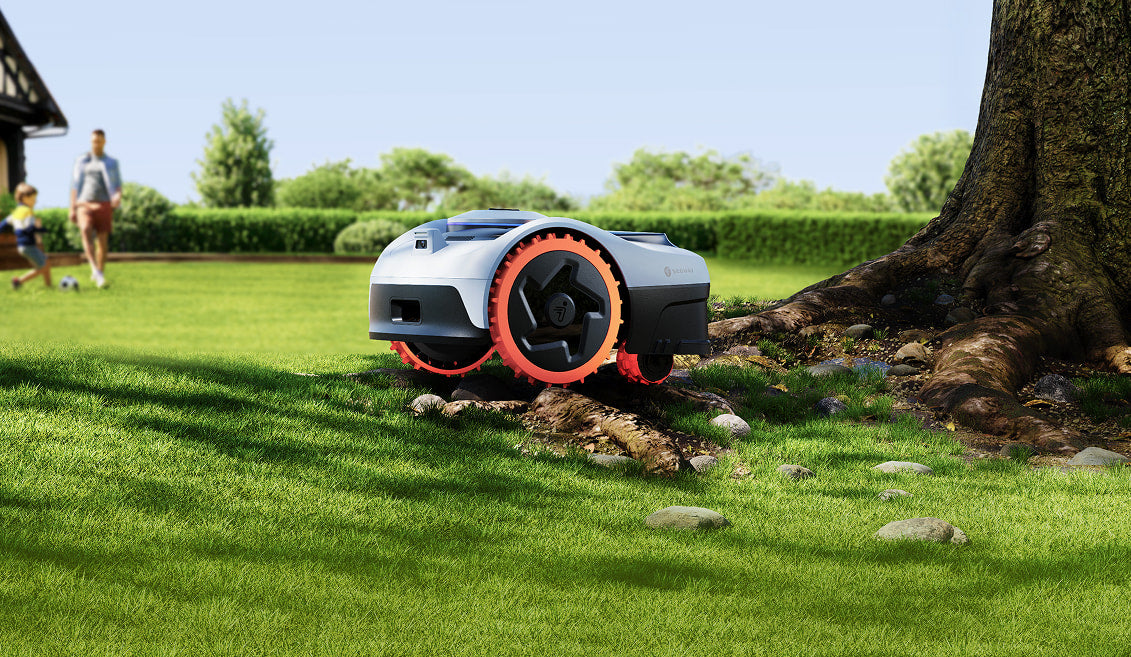
Navimow i108E
- Coverage
- ~0.2 acre (≈8,700 sq ft)
- Max slope
- ~24° (≈45%)
- AWD
- No
If your lawn is up to about an eighth of an acre and you want the simplest wire-free experience on the market, the i108E is hard to beat.
Related guides
- Robot Mower Winter Storage: Step-by-Step Checklist
What to do in November so the mower starts cleanly in April — battery, dock, blades, and the things owners forget.
- How Much Does It Cost to Run a Robot Mower? (Electricity)
Real kWh math at average U.S. electricity rates — the running cost is even lower than you think.
- Robot Mower Rain Sensors: Do They Actually Help?
Yes — but the threshold matters, and so does what the mower does once it senses moisture.
- See our full ranking of the best robot mowers →