How Much Does It Cost to Run a Robot Mower? (Electricity)
Real kWh math at average U.S. electricity rates — the running cost is even lower than you think.
If you’re tired of spending a low cost a gallon to keep your traditional tractor chugging along, you’ve likely looked at a robot mower and wondered if you’re just trading a gas bill for a massive spike in your electric utility statement. It’s a fair question. These machines live outside 24/7, constantly sipping power to keep their batteries topped up and their blades spinning.
The short answer is surprisingly pleasant: running a robot mower is one of the cheapest things you can do in your home. For the vast majority of U.S. homeowners, the robot mower electricity cost amounts to less than the price of a single fancy latte over the course of an entire month. Even if you have a massive lawn and expensive local utility rates, you’re still looking at pocket change compared to the cost of gasoline, oil filters, and spark plugs.
The Basic Math: Watts vs. Gas
To understand what you’ll actually pay, you have to look at the battery capacity and the charging frequency. Most residential robot mowers, like the Segway Navimow or the Worx Landroid, use lithium-ion batteries ranging from 2.0Ah to 10Ah.
On average, a standard robot mower designed for a quarter-acre lot consumes about 15 to 30 kilowatt-hours (kWh) per month. According to recent U.S. Bureau of Labor Statistics data, the average price of electricity in the U.S. is around 17 cents per kWh.
If your mower uses 20 kWh a month to keep your grass at a steady 2.5 inches, you are looking at a monthly operating cost of roughly a lower cost. Over a six-month mowing season, that’s about a small amount. For comparison, a traditional gas walk-behind mower might burn through a few dollars in fuel for a single month of weekend mows.
Size Matters: Small Yards vs. Acreage
Naturally, the cost scales with the size of your property. If you’re running a Mammotion LUBA 2 AWD or a high-end Husqvarna Automower on a full acre of thick grass, the motor has to work harder and the battery needs to charge more frequently.
- Small Lots (Under 0.25 acre): These mowers often use very small batteries. You might only spend a low cost or a low cost a month.
- Medium Lots (0.5 acre): This is the sweet spot where most users land, typically seeing costs between a low cost and a low cost per month.
- Large Lots (1+ acre): Even if you have a "fleet" of mowers or a large-scale unit like the Husqvarna 450X, your monthly cost is unlikely to exceed a few dollars.
Keep in mind that "idling" counts too. Even when the mower is parked in its station, it draws a tiny amount of "vampire" power to keep its sensors active and maintain the perimeter wire signal (if your model uses one). However, this draw is negligible—usually less than 5 watts.
Wire-Free vs. Boundary Wire Mowers
There is a minor difference in power consumption between traditional "boundary wire" mowers and the newer "wire-free" GPS/RTK models like the EcoFlow Blade or the Ecovacs Goat.
Boundary wire systems require the charging station to send a constant low-voltage electrical pulse through a loop of wire buried around your yard. This pulse tells the mower where the edge is. While this consumes power 24/7, it’s an incredibly low draw.
Wire-free models skip the loop but often use "reference stations" (usually a small antenna on a pole) or camera-based AI that requires the mower’s onboard computer to do more heavy lifting. While the robot mower electricity cost for an RTK system might be a few pennies higher due to the base station being plugged in, the difference is so small it won't show up as a line item on your bill.
Hidden Savings: The Maintenance Factor
When people ask about the cost of electricity, they are usually trying to calculate the Total Cost of Ownership (TCO). This is where the robot mower really shines. While you are paying a few dollars a month for power, you are saving significantly on:
- No oil changes: No more messy pans or trips to the hardware store for 10W-30.
- No air filters: There is no internal combustion, so there's no air to filter.
- Fewer blade sharpenings: Most robots use small, razor-like blades (like those on the Anthbot Genie or Eufy models) that are replaced for a few dollars rather than being professionally sharpened.
If you factor in the a noticeable amount you might spend on a spring tune-up for a gas mower, the robot has already paid for its electricity for the next three to five years.
How to Keep Costs Low
If you live in a region where electricity is expensive (looking at you, California and Hawaii), there are a few ways to ensure your robot mower electricity cost stays at the bottom of the scale:
- Mow at night: If your utility provider offers "time-of-use" rates, schedule your mower to charge during off-peak hours (usually overnight). Since robots are nearly silent, they won't wake the neighbors.
- Keep blades sharp: Dull blades tear the grass rather than cutting it. This creates resistance, which drains the battery faster and forces more frequent trips to the charging station.
- Don't ignore the "rain sensor": Cutting wet, heavy grass is much more energy-intensive than cutting dry turf. Use the mower's smart features to stay in the garage during downpours.
Bottom Line
Running a robot mower is arguably the most energy-efficient way to maintain a landscape. Between the low cost of residential electricity and the inherent efficiency of brushless electric motors, you will likely spend more on the replacement blades than you will on the power to turn them.
Are They Worth It
Read now →Mowers mentioned
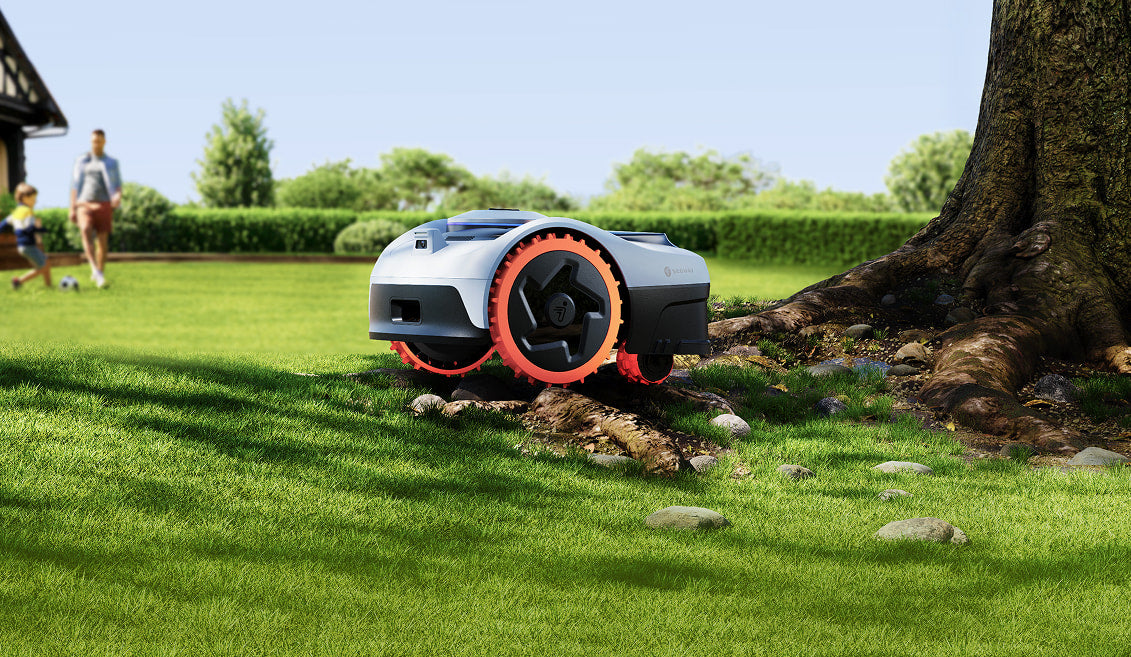
Navimow i108E
- Coverage
- ~0.2 acre (≈8,700 sq ft)
- Max slope
- ~24° (≈45%)
- AWD
- No
If your lawn is up to about an eighth of an acre and you want the simplest wire-free experience on the market, the i108E is hard to beat.
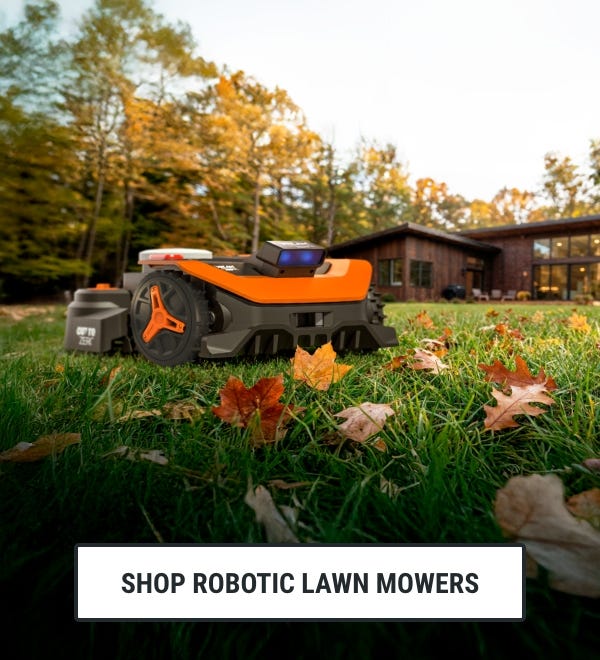
WORX Landroid L WR155
- Coverage
- ~0.5 acre (≈22,000 sq ft)
- Max slope
- ~20° (≈35%)
- AWD
- No
If you can stomach an afternoon of laying boundary wire, the WORX Landroid L WR155 is the most square footage per dollar you'll find from a name-brand mower.
Related guides
- Robot Mower Winter Storage: Step-by-Step Checklist
What to do in November so the mower starts cleanly in April — battery, dock, blades, and the things owners forget.
- Robot Mower Battery Life & Replacement Cost
Cycle life, calendar life, what really kills lithium packs, and what you'll pay to swap one in year 4.
- Robot Mower Rain Sensors: Do They Actually Help?
Yes — but the threshold matters, and so does what the mower does once it senses moisture.
- See our full ranking of the best robot mowers →