Robot Mower Rain Sensors: Do They Actually Help?
Yes — but the threshold matters, and so does what the mower does once it senses moisture.
If you’ve ever looked at a damp lawn and instinctively reached for your rain boots rather than your lawn mower, you’re already more cautious than most robots. Most people assume that because a machine is "smart," it knows when to come in out of the rain. The short answer is yes, a robot mower rain sensor actually helps, but its utility depends entirely on your grass type, your dirt, and how much you care about the aesthetic of your lawn’s "finish."
For most owners, the rain sensor isn't about protecting the electronics—most modern bots from brands like Husqvarna or Segway are rated to handle a splash—it’s about preventing the mower from turning your backyard into a muddy disaster. If your mower doesn't have a sensor, or if you choose to disable it, you’re essentially betting that your soil drainage is perfect and your grass won't tear. It’s a risky bet.
How the Sensor Actually Works
It’s less high-tech than you might think. We aren't talking about sophisticated meteorological equipment. Most rain sensors on units like the Worx Landroid or the Mammotion LUBA 2 are simple conductivity sensors. Usually, there are two metal contact points on top of the mower. When water bridges the gap between those two points, it completes a circuit. The mower’s "brain" realizes it’s getting wet and triggers its "Return to Home" command.
Some newer, high-end wire-free models like the Segway Navimow or the Ecovacs Goat utilize more advanced methods, sometimes checking local weather forecasts via Wi-Fi or cellular data in addition to physical sensors. However, the physical sensor remains the gold standard because local forecasts are notoriously unreliable for hyper-local "micro-burst" storms over your specific zip code.
Why You Don't Want a Mower Running in a Downpour
While manufacturers often tout that their machines are "all-weather," veterans in the robot mowing community will tell you that "can" and "should" are two very different things. Here is why the rain sensor is your best friend when the clouds open up:
- Clumping and Clogging: Wet grass clippings are sticky. Instead of being finely mulched and disappearing into the turf, they stick to the underside of the mower deck and the blades. This creates a "crust" that reduces cutting efficiency and can eventually stall the motor.
- Traction and Tearing: This is the big one. Most robot mowers carry significant weight for their size. When the ground is saturated, the wheels (especially on steep slopes) will slip. A slipping robot mower is essentially a small tiller, ripping the roots out of your grass and leaving bare mud streaks.
- Track Marks: Even if the mower doesn't slip, the repetitive path it takes back to the charging station can create deep ruts in soft, wet soil.
The Problem with "False Positives" and Sensitivity
The biggest complaint about the robot mower rain sensor is that it can be a bit too sensitive—or not sensitive enough. If you live in a high-humidity area with heavy morning dew, a sensitive sensor might keep the mower in its garage until noon, even though the sun is out.
Pro Tip: Look for a mower that allows you to adjust the "delay" after a rain event. A good mower shouldn't just head back out the second the sensor dries; it should wait two or three hours to let the lawn actually drain.
Brands like Worx allow you to calibrate this delay in their app. If you have sandy soil that drains instantly, you can set a short delay. If you have heavy clay that stays boggy for a day, you can tell the mower to stay put for several hours. Without this adjustment, a rain sensor can actually become a nuisance that prevents your lawn from ever getting fully mowed during a wet spring.
Brands That Do It Differently
Not every manufacturer leans on a physical sensor. Take Husqvarna, for example. Many of the premium Automower models (like the 430X or 450X) are designed with such high-clearance decks and specialized tire treads that they are marketed to mow in the rain without a traditional sensor. Husqvarna’s philosophy is often "just keep mowing," based on the idea that if the mower never stops, it never has to catch up on overgrown, wet grass.
On the other end of the spectrum, you have the newer "vision-based" bots like the Eufy S1 Pro or the Anthbot Genie. These often use a combination of optical sensors and moisture detection to decide if the "view" of the grass is obscured by droplets. Then there is the yuka-2000" class="text-primary font-medium hover:underline">Mammotion Yuka, which is often used with a sweeper attachment; you definitely don't want that sweeper trying to pick up wet, heavy grass, making its rain sensor vital for the longevity of the collection system.
Maintenance: Keeping the Sensor Functional
If you find that your mower is staying out in the rain when it shouldn't, or refusing to leave the dock on a sunny day, the robot mower rain sensor likely needs a quick cleaning. Because these are just exposed metal contacts, they can get "filmed over" with pollen, dust, or dried grass juice.
A quick wipe with a damp cloth (or a very light scuff with a Scotch-Brite pad if there’s mineral buildup from hard water) usually restores functionality. If you use a pressure washer on your mower (which you generally shouldn't, but people do), you can also accidentally knock these sensors out of alignment or force water into the housing.
The Trade-off: Aesthetics vs. Uptime
The choice to use a rain sensor always comes down to a trade-off. If you enable the sensor and it rains for three days straight, your grass is going to get tall. When the mower finally does go out, it will have a much harder time catching up.
If you disable the sensor, your grass will stay short, but you might have to spend your Saturday morning filling in ruts with topsoil and grass seed. For most homeowners, especially those with robots in the the mid-tier range range, the "safe" play is to let the sensor do its job.
Bottom Line
A robot mower rain sensor is an essential safeguard that prevents your lawn from being torn up and your mower deck from becoming a clogged mess. While you might need to tweak the sensitivity settings to account for morning dew, it's far better to have a slightly shaggy lawn than a lawn full of muddy tire tracks.
Buying Guide
Read now →Mowers mentioned
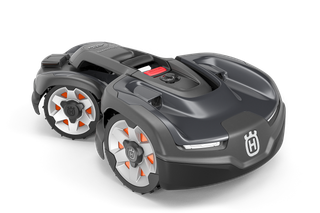
Husqvarna Automower 415X
- Coverage
- ~0.4 acre (≈17,000 sq ft)
- Max slope
- ~22° (≈40%)
- AWD
- No
Boring in the best way. Husqvarna's 415X has been polished over a decade of Automower releases — set it up once and it runs for years.
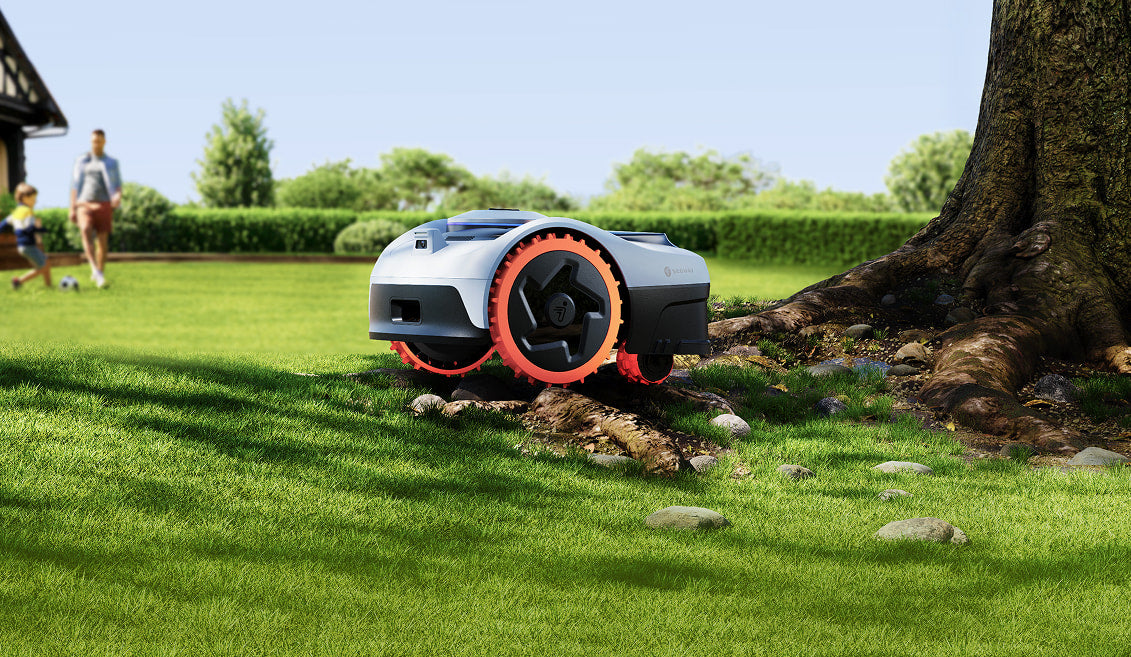
Navimow i108E
- Coverage
- ~0.2 acre (≈8,700 sq ft)
- Max slope
- ~24° (≈45%)
- AWD
- No
If your lawn is up to about an eighth of an acre and you want the simplest wire-free experience on the market, the i108E is hard to beat.
Related guides
- Robot Mower Winter Storage: Step-by-Step Checklist
What to do in November so the mower starts cleanly in April — battery, dock, blades, and the things owners forget.
- Robot Mower Battery Life & Replacement Cost
Cycle life, calendar life, what really kills lithium packs, and what you'll pay to swap one in year 4.
- How Much Does It Cost to Run a Robot Mower? (Electricity)
Real kWh math at average U.S. electricity rates — the running cost is even lower than you think.
- See our full ranking of the best robot mowers →