Robot Mowers for Lawns Under 1/4 Acre: What to Know
The trap small-lot owners fall into — buying for a quarter acre when they only have an eighth — and how to right-size.
The biggest mistake homeowners make when shopping for a robot mower for a small yard is "over-buying" for capacity. If you have a standard suburban lot—usually around 0.15 to 0.20 acres of actual grass—you don’t need the heavy-duty tech designed for a sprawling estate. In fact, buying an oversized mower for a small yard often means you’re paying for batteries and motors that will never reach their potential, and you might even end up with a machine that is too physically large to navigate your side yards.
The short answer: For a lawn under 1/4 acre, prioritize agility and navigation technology over battery life. You can save hundreds of dollars by choosing a model designed for tight spaces, but you have to decide if you're willing to bury a perimeter wire or if you want to pay the premium for wire-free GPS or LiDAR technology.
The Quarter-Acre Trap
When you see a robot mower rated for "0.25 acres," that number is usually its absolute physical limit if it runs nearly 24/7. In the industry, we generally recommend "right-sizing" by choosing a mower with a rated capacity about 20% higher than your actual turf area. However, on a very small lot, this logic flips. If your actual grass area is only 5,000 square feet (roughly 1/8 acre), a mower rated for a quarter acre is more than enough.
The trap is buying a "pro" model because you think it will "cut faster." Robot mowers aren't like ride-on tractors; they are designed to maintain, not to reclaim. A smaller, lighter mower like the Worx Landroid S or the entry-level Husqvarna Automower 115H is often better for small yards because they have a narrower footprint. They can get into those 3-foot-wide strips between your house and the fence where a beefier Mammotion LUBA 2 or a high-end Husqvarna 400-series might struggle to turn around.
Boundary Wires vs. Satellite Navigation
This is the single biggest decision you’ll make. For years, the only way to keep a mower on your lawn was a physical "invisible fence" wire buried an inch underground. As we move into 2024 and 2025, wire-free is becoming the standard.
- Boundary Wire Mowers: Options like the Worx Landroid or the base Husqvarna models are generally the most affordable. For a small yard, burying the wire is an afternoon project, not a week-long ordeal. Once it's in, it’s incredibly reliable.
- Wire-Free (RTK/GPS/LiDAR): Models like the Segway Navimow i105N or the Anthbot Genie use satellite or camera data. The setup takes minutes, not hours. However, small yards often have "urban canyons"—the narrow space between two tall houses—which can block the satellite signals these mowers need to stay positioned.
If your small yard has wide-open views of the sky, go wire-free. If your yard is tucked between tall two-story homes and giant oak trees, a wired mower is still the "set it and forget it" champion.
Maneuverability and Narrow Passages
In a small suburban lot, the "choke points" are your biggest enemy. You likely have a gate, a narrow walkway, or a strip of grass between the driveway and the neighbor's property.
When shopping for a robot mower small yard solution, look at the minimum passage width. Some mowers require a 3-foot or even 4-foot clearance to navigate reliably. The Segway Navimow and the Ecovacs Goat G1 series are particularly good at handling these tight spots using their onboard cameras to "see" obstacles and boundaries, rather than just bumping into things.
If you have a gated backyard, you'll need to figure out if you're willing to leave the gate open or install a specialized "robot doggy door." Without this, you’ll find yourself carrying the mower from the front to the back, which defeats the purpose of automation.
Features You Actually Need (and Those You Don't)
It is easy to get blinded by a spec sheet. For a lot under 1/4 acre, here is how to triage the features:
- Must-Have: Rain Sensors. On a small lawn, ruts form quickly. You don't want a mower spinning its wheels on wet 5,000-square-foot turf.
- Must-Have: App Connectivity. Even on a small lot, you want to be able to tell the mower to "stay home" because you're having a barbecue or the kids left toys on the lawn.
- Skip: High Top Speed. Fast mowers are for big fields. On a small yard, the mower spends half its time turning around. Accuracy in the corners is better than speed in the straights.
- Skip: Massive Battery Life. Most entry-level bots for small yards can mow for 60-90 minutes. That’s plenty. They’ll just go back to the base, charge, and finish later.
Budgeting for the Small Lot
You shouldn't have to spend five thousand dollars to mow an eighth of an acre. The market for a robot mower small yard has become very competitive, which is great for your wallet.
On the low end, you can find wired models starting in the mid-to-high three figures. These are basic, "bump-and-turn" robots that work like a Roomba for your grass. If you want the latest wire-free technology, prices usually start around the entry-level tier. While brands like Segway and Mammotion have brought these prices down significantly, you are still paying a premium for the convenience of not digging a trench.
Pro Tip: Look for "last year's model" from reputable brands like Husqvarna. Since small-yard tech doesn't change as rapidly as the high-end stuff, a three-year-old Automower design will still cut your grass just as well as a brand-new one for several hundred dollars less.
Bottom Line
For a yard under 1/4 acre, don't over-engineer. Focus on a mower that can handle your specific narrow passages and signal obstructions, and don't be afraid of a boundary wire if it saves you five hundred dollars on a lot that only takes 20 minutes to wire. Smaller is often better when it comes to navigating the tight corners of suburban life.
Best for Small Yards
Read now →Mowers mentioned
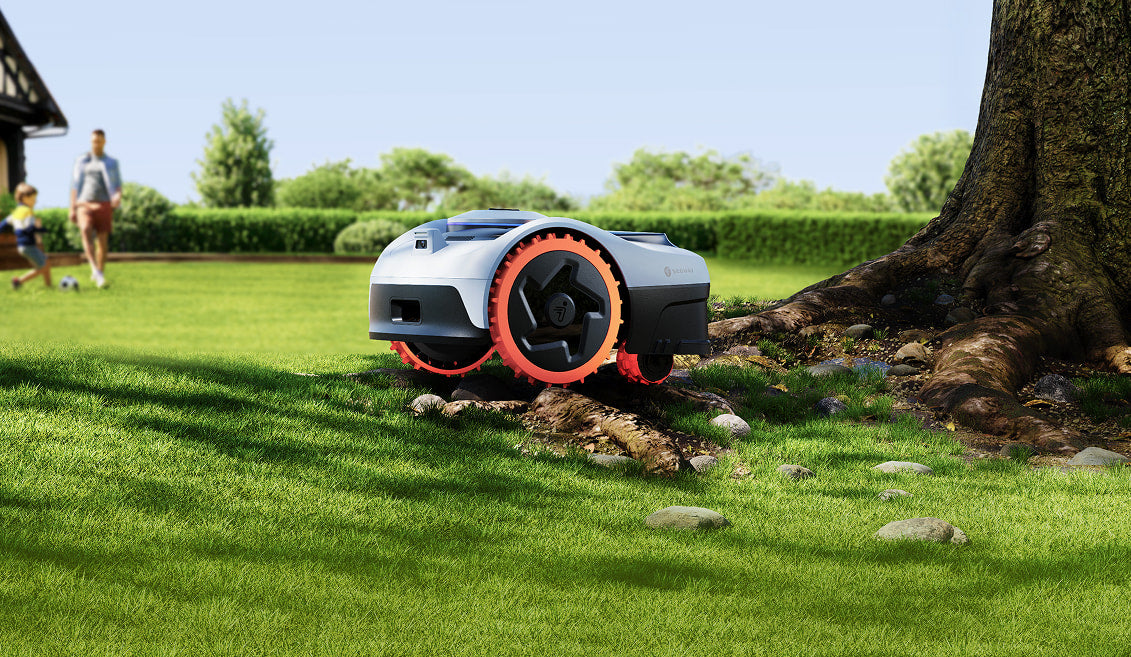
Navimow i108E
- Coverage
- ~0.2 acre (≈8,700 sq ft)
- Max slope
- ~24° (≈45%)
- AWD
- No
If your lawn is up to about an eighth of an acre and you want the simplest wire-free experience on the market, the i108E is hard to beat.
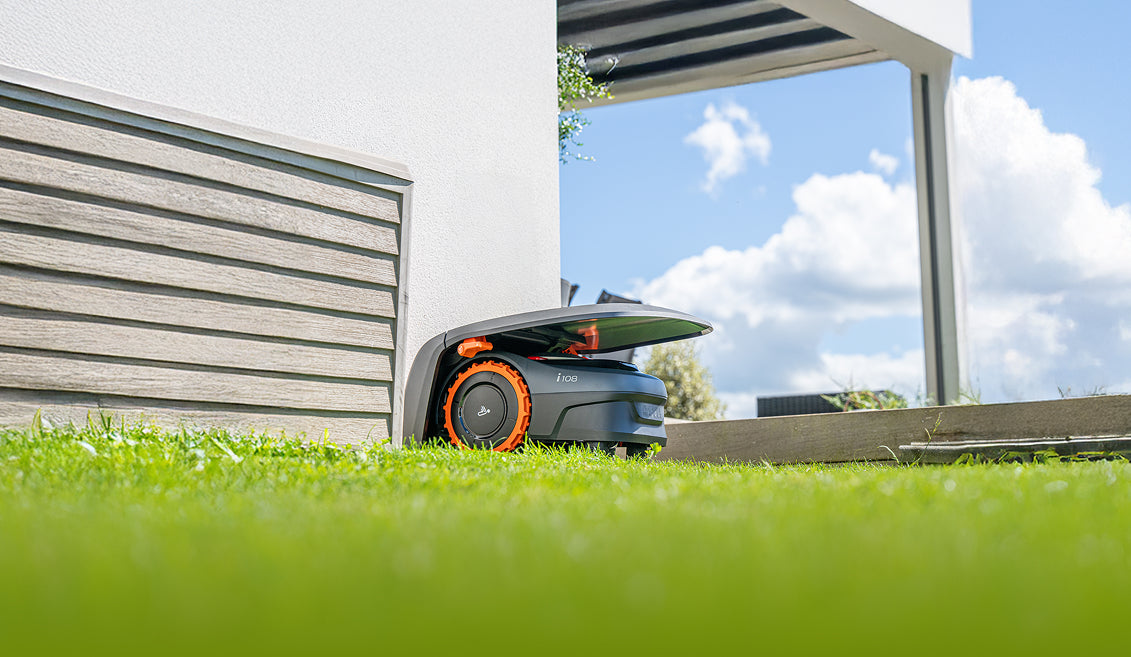
Navimow i105N
- Coverage
- ~0.12 acre (≈5,200 sq ft)
- Max slope
- ~24° (≈45%)
- AWD
- No
The Navimow i105N is the cheapest way into a real wire-free robot mower for a small American yard. RTK plus vision keeps it on the right side of the fence without burying any wire.
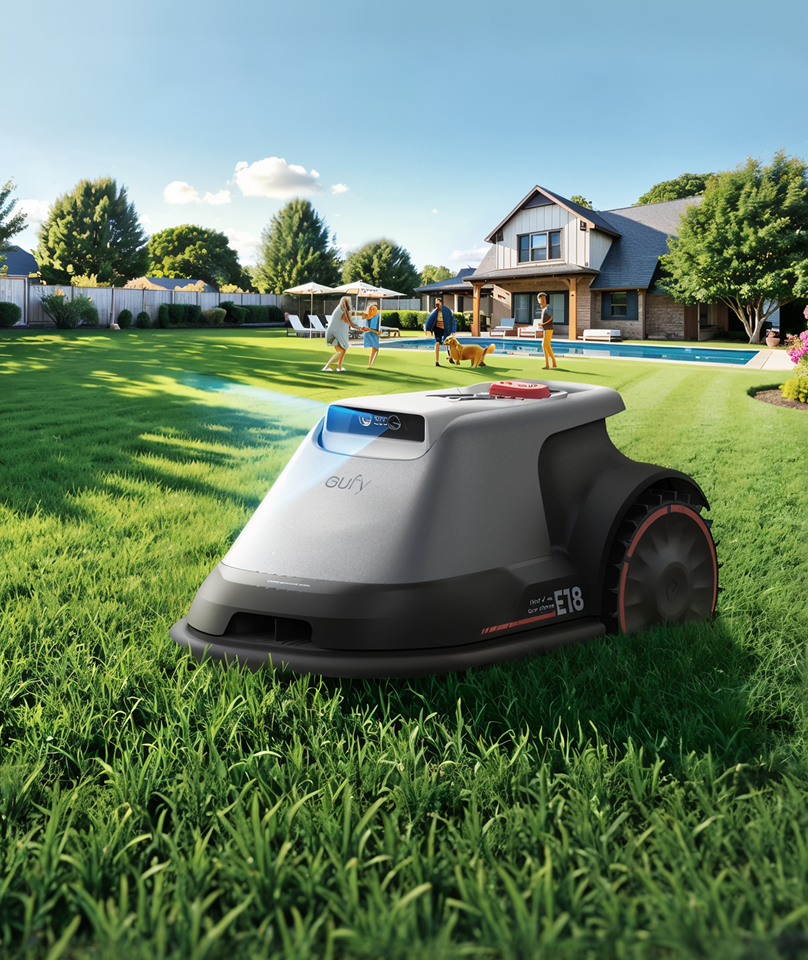
eufy Robot Mower E15
- Coverage
- ~0.2 acre (≈8,700 sq ft)
- Max slope
- ~20° (≈36%)
- AWD
- No
If quiet matters — early mornings, fussy neighbors, an HOA — the eufy E15 is the easiest robot mower in this list to live with.
Related guides
- How Do Robot Lawn Mowers Work? Plain-English Guide
A neutral, jargon-free walkthrough of what's actually going on inside the dock, on the lawn, and in the app.
- Are Robot Lawn Mowers Worth It? 2026 Cost Breakdown
Five-year math against a gas mower and a lawn service — with real American pricing, not press-release numbers.
- Best Robot Mowers for Steep & Sloped Yards (AWD Explained)
Slope percent vs. degree, why AWD matters, and which mowers actually keep their grip on real American hill yards.
- See our full ranking of the best robot mowers →