Best Robot Mowers for Steep & Sloped Yards (AWD Explained)
Slope percent vs. degree, why AWD matters, and which mowers actually keep their grip on real American hill yards.
If your yard looks more like a ski slope than a suburban lawn, you’ve probably been told that a robot mower isn’t for you. For years, that was mostly true; early models would lose traction, tumble down hills, or simply give up and throw an "out of bounds" error the moment they hit a real incline. But the technology has caught up, and if you choose a specialized robot mower for steep slope duty, you can finally retire that dangerous walk-behind mower.
The short answer is that for anything over a 20-degree incline, you need to abandon the entry-level front-wheel-drive models and look toward All-Wheel Drive (AWD) or specialized high-traction systems. Brands like Husqvarna and Mammotion are currently leading the charge here, but understanding the difference between "marketing math" and real-world traction is the key to not wasting your money.
Slope Math: Percent vs. Degrees
Before you go shopping, we need to clear up the most common point of confusion in the industry: gradient measurement. Manufacturers love to use percentages because the numbers look more impressive. A 45% slope sounds terrifying, but in reality, that is only about 25 degrees.
- Degrees: A 45-degree angle is a perfect diagonal (a 1:1 rise/run). Very few robots can handle this.
- Percentage: This is the "rise over run." A 50% slope means the ground rises 5 feet for every 10 feet of horizontal distance.
Most standard robots (like the Worx Landroid or basic Segway Navimow models) handle up to 20 degrees (approx. 35%). If your hill is steeper than that, or if your grass is frequently damp, those wheels will spin, tear up your turf, and the mower will eventually slide into your flower beds. If your yard sits in the 25 to 35-degree range, you are officially in "specialist" territory.
Why AWD and Weight Distribution Matter
In the world of robot mowers, All-Wheel Drive isn't just a luxury feature—it’s a physics requirement. On a steep incline, a two-wheel-drive mower loses traction because the weight shifts away from the driving wheels.
Take the automower-435x-awd" class="text-primary font-medium hover:underline">Husqvarna Automower 435X AWD. It features an articulated body, meaning the mower can "bend" in the middle. This allows all four wheels to maintain contact with the ground even on uneven transitions. It is rated for slopes up to 70% (about 35 degrees). While it sits in the mid-to-high four-figure price range, it is essentially the gold standard for hills that would be dangerous to mow by hand.
However, traction isn't just about the number of motors. Tire tread matters. Some owners of the Worx Landroid or Ecowacs Goat aftermarket "spikes" or heavier off-road wheels to help with grip. If you’re looking at a robot mower for steep slope performance, look for aggressive, lugged tires rather than smooth, plastic ones.
The Perimeter Challenge: Why Hills Lead to Breakouts
One often-overlooked issue with slopes is the "boundary slide." If your boundary wire or virtual GPS map edge is at the bottom of a steep hill, physics is your enemy. When a mower approaching the edge tries to stop or turn on a steep descent, momentum often carries it right past the "stop" line.
If you use a wire-based system, you have to bury the wire further back from the edge of the slope than the manual suggests. If you use a GPS-based system—like the Segway Navimow or the EcoFlow Blade—you need to build in an "offset" or a buffer zone in the app.
Pro Tip: Never place your charging station at the bottom of a steep hill. If the mower is low on battery, it may not have enough "juice" left to climb the hill back to its home. Always try to place the station on a flat area or at the top of the incline.
Real-World Heavy Hitters for Slopes
If you have a yard that makes your neighbors nervous, these are the models currently dominating the "mountain climber" category:
- Mammotion LUBA 2 AWD: This is currently one of the most popular choices for homeowners who don't want to spend five figures. It uses four-wheel drive and a dual-blade system. It's rated for 38-degree slopes (roughly 80% grade), which is industry-leading for a consumer-grade unit. Because it uses RTK-GPS (no wires), it's easy to map, but keep in mind that its aggressive "tank turn" style can sometimes scuff up soft turf on hills.
- Husqvarna Automower 435X AWD: As mentioned, this is the premium "buy it once" solution. The articulated steering is much gentler on the grass than the "skid-steer" style of the LUBA. It's quiet, incredibly reliable, and handles transitions (where the level ground suddenly becomes a hill) better than anything else on the market.
- Segway Navimow (i series and H series): While not as aggressive as the AWD models, the H-series in particular is known for having large, high-torque rear wheels. It can handle about 24 degrees. It's a solid mid-range choice if your slope is "significant" but not "mountaineering level."
The Trade-off: Maintenance and Safety
Operating a robot mower for steep slope work means you'll be replacing parts more often. Gravity is a constant load on the motors and the drivetrain. You should expect to replace the tires or treads every two seasons, as worn-down lugs will lead to the mower sliding.
Safety is the other big factor. If a mower loses its grip on a 30-degree slope, it becomes a 30-pound projectile. Always ensure your mower has "lift and tilt" sensors that actually work. Most modern brands like Eufy or the Anthbot Genie have these, but on a steep hill, a "tilt" sensor might trigger prematurely if the mower hits a bump. High-end slope mowers have more sophisticated gyroscopes that can tell the difference between "I'm on a hill" and "I'm flipping over."
Bottom Line
If your yard is moderately sloped, a high-quality rear-wheel-drive unit with off-road tires will usually suffice. However, for truly steep American "backyard bluffs," you should look exclusively at AWD models like the Husqvarna 435X or the Mammotion LUBA 2. Don't cheap out on traction—it's the difference between a perfectly manicured hill and a robot stuck in the bushes every Tuesday.
Best for Hills
Read now →Mowers mentioned
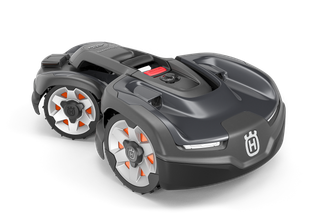
Husqvarna Automower 435X AWD
- Coverage
- ~0.6 acre (≈26,000 sq ft)
- Max slope
- ~70% grade (rated)
- AWD
- Yes
If your yard looks like a ski run, this is still the gold standard. The 435X AWD will mow grades that would tip every other robot mower on the market.
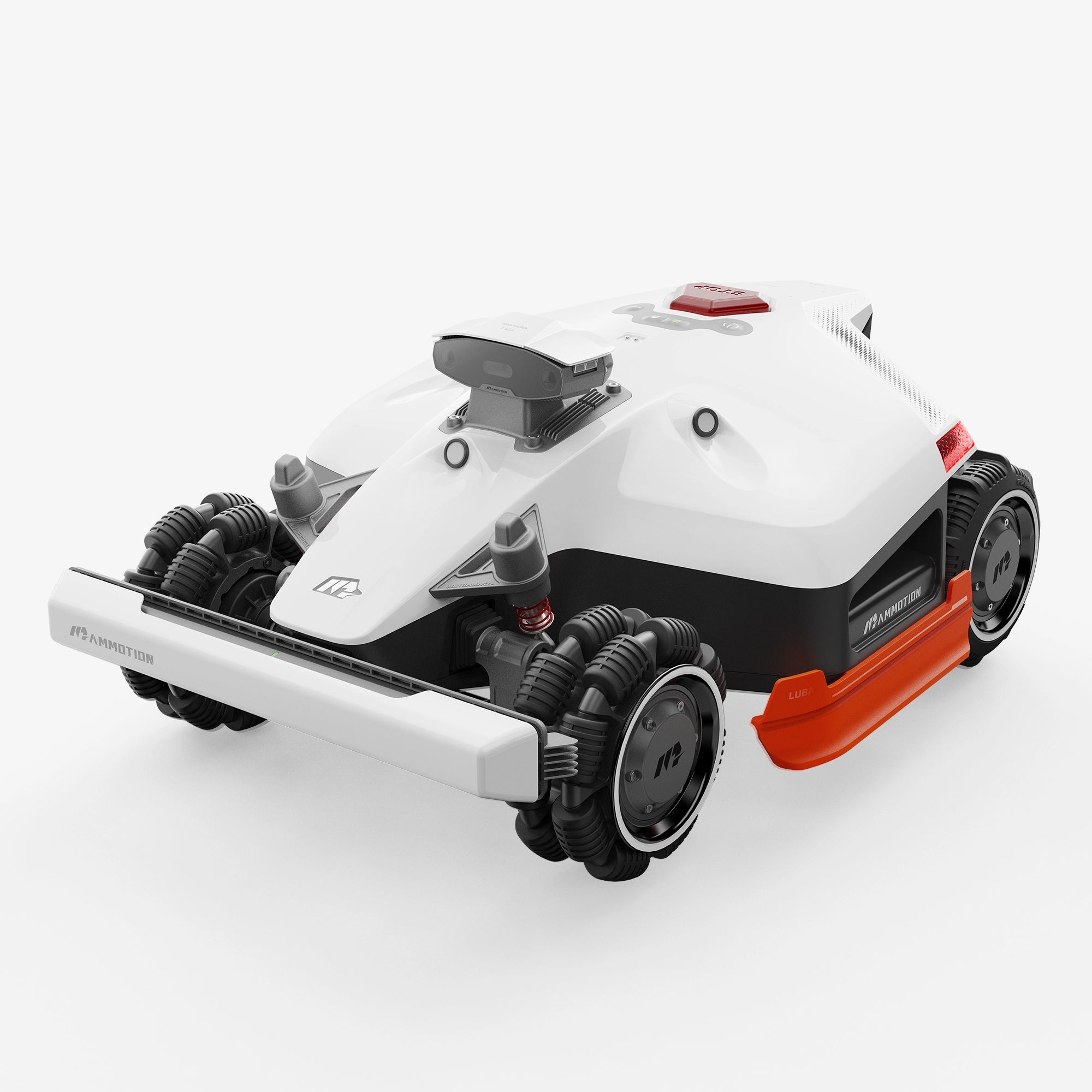
Mammotion LUBA 2 AWD 5000
- Coverage
- Up to ~1.25 acre (≈54,000 sq ft)
- Max slope
- ~38° (≈78%)
- AWD
- Yes
The LUBA 2 AWD 5000 is the wire-free mower for owners of a full acre with hills. Few competitors combine that coverage with serious slope rating.
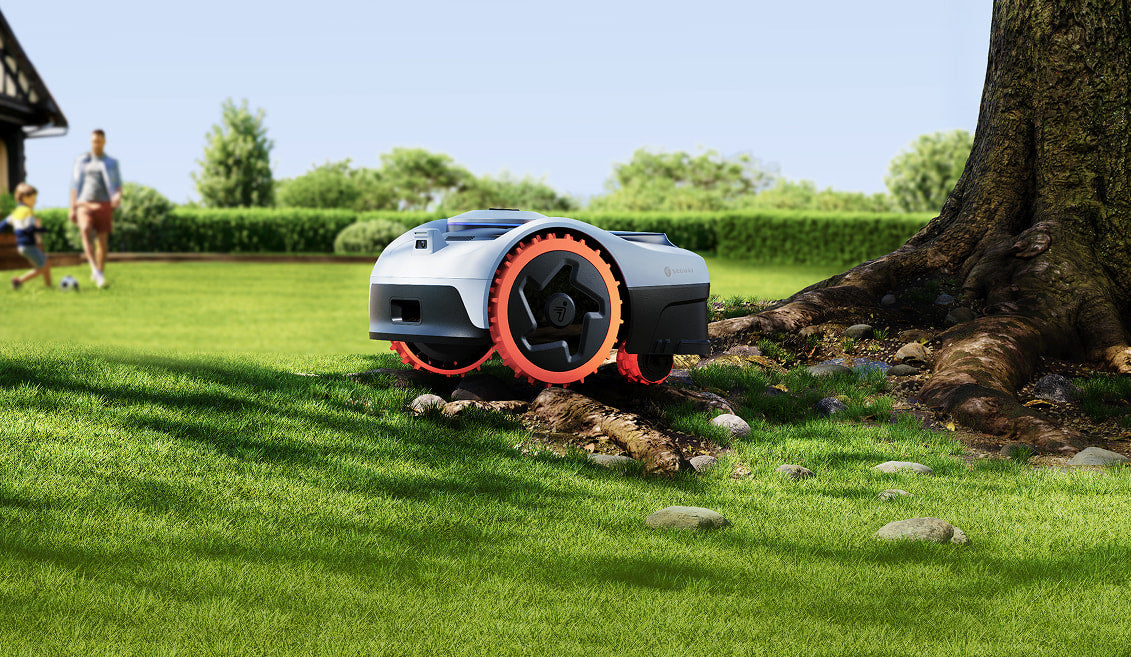
Navimow i2 AWD (i206)
- Coverage
- ~0.15 acre (≈6,500 sq ft)
- Max slope
- ~45% grade
- AWD
- Yes
The Navimow i2 AWD is the easiest way to get true all-wheel drive on a wire-free mower without spending Husqvarna money.
Related guides
- How Do Robot Lawn Mowers Work? Plain-English Guide
A neutral, jargon-free walkthrough of what's actually going on inside the dock, on the lawn, and in the app.
- Are Robot Lawn Mowers Worth It? 2026 Cost Breakdown
Five-year math against a gas mower and a lawn service — with real American pricing, not press-release numbers.
- Are Robot Lawn Mowers Safe Around Dogs and Kids?
What the sensors actually detect, how fast the blades stop, and which features matter most for households with pets and kids.
- See our full ranking of the best robot mowers →