Are Robot Lawn Mowers Safe Around Dogs and Kids?
What the sensors actually detect, how fast the blades stop, and which features matter most for households with pets and kids.
If you’re considering ditching your old push mower for an autonomous one, the "danger factor" is likely your biggest hurdle. We’ve all seen what a traditional lawn mower can do to a stray tennis ball or a rogue flip-flop. The idea of a blade-swinging robot roaming the yard while your golden retriever naps or your toddler chases bubbles is enough to give any parent pause.
The short answer is that modern robot mowers are significantly safer than traditional gas mowers, but they aren't foolproof. While a human-operated mower accounts for thousands of ER visits annually, robot mowers use a combination of low-torque motors, pivoting blades, and sophisticated sensors to minimize risk. However, "safer" isn't the same as "set and forget." Here is what you need to know about keeping your yard secure.
How the Blades Actually Work
The most important distinction between a robot mower and a tractor is the blade design. Most consumer models, like the Worx Landroid or the Husqvarna Automower, don't use the massive, heavy steel bars found on gas mowers. Instead, they use small, razor-like blades attached to a spinning disc. These blades are often "pivoting," meaning if they hit a hard object like a rock or a sturdy dog bone, they tuck away rather than hacking through it with brute force.
Furthermore, the "skirt" or the outer housing of the mower usually sits very low to the ground. This physical barrier is designed to prevent a foot or a paw from sliding under the machine while it’s in motion. If the mower is lifted or tilted even a few degrees, an onboard accelerometer triggers an instant blade stop. Based on aggregated owner reports, these kill-switches are incredibly sensitive; even a bumpy root can sometimes trigger a safety halt.
Navigation and Obstacle Avoidance
How a mower "sees" determines its safety profile. Older or budget-friendly models often rely on "bump-and-turn" technology. They drive until they physically hit something, then reverse and change direction. While the impact is usually gentle, it’s not ideal if the "obstacle" is a sleeping puppy.
If you are looking for a robot lawn mower safe for pets, you should prioritize models with active obstacle avoidance.
- Ultrasonic Sensors: Found on many premium Husqvarna models and the Segway Navimow, these work like a bat’s sonar, slowing the mower down before it ever touches an object.
- AI Camera Vision: This is the current gold standard. Mowers like the Ecovacs Goat, the Mammotion LUBA 2, or the Eufy S1 Pro use cameras trained on thousands of images to recognize specifically what a dog or a child looks like.
- LiDAR: Used by the EcoFlow Blade and others, this uses lasers to create a 3D map of the environment, allowing the mower to navigate around toys left in the grass rather than trying to mulch them.
The "Pet Mode" and Scheduling Safety
The most effective safety feature isn't a sensor at all—it’s the software. Almost every robot mower on the market allows for granular scheduling. The easiest way to ensure a robot lawn mower safe for pets is to simply schedule the mower to run when the pets are inside.
Many owners prefer to run their mowers at night to keep the yard clear for the kids during the day. However, this introduces a different risk: wildlife. Hedgehogs, toads, and nocturnal critters are much more likely to be hit at night. Some brands, like Husqvarna, have introduced "Wildlife Modes" that disable night mowing or limit speeds during dusk and dawn to give animals time to move.
Pro Tip: If your dog is a "herder" or aggressive toward vacuum cleaners, a robot mower might trigger their prey drive. It only takes one determined German Shepherd to flip a mower over or chew the charging station. Always supervise the first few mows to see how your dog reacts.
Comparison: RTK (Wireless) vs. Perimeter Wire
There is a subtle safety difference between mowers that use a physical underground wire and those that use GPS/RTK (like the Segway Navimow or Anthbot Genie).
Boundary-wire mowers are generally more "contained." They cannot physically leave the loop unless the wire is cut. RTK mowers rely on satellites and signal strength. While they are incredibly accurate (often to within an inch), a momentary "signal shadow" or a software glitch can occasionally cause them to wander a foot or two outside their digital fence. If your yard isn't fenced in and you have kids who play near a busy street, the physical boundary of a wire system offers a slight edge in "fail-safe" peace of mind.
Physical Security and Theft Prevention
Safety isn't just about blades; it’s about curious hands. Most mowers come with a PIN code system. If a child lifts the mower, not only do the blades stop, but a loud alarm usually sounds, and the machine becomes a "brick" until the adult enters the code. This prevents kids from trying to "play" with the mower or manually starting it when they shouldn't.
Models like the Segway Navimow and high-end Husqvarnas also feature geofencing alerts. If the mower is moved outside of your property, you get a notification on your phone immediately. This is as much a safety feature for your neighborhood as it is a theft deterrent.
Bottom Line
A robot mower is fundamentally safer than a human pushing a loud, heavy machine, but it is still a power tool with sharp parts. If you have small children or pets, look for a model with AI camera vision or ultrasonic sensors and always schedule your mowing sessions when the yard is empty. They are reliable assistants, but they shouldn't be your kids' new playmate.
Buying Guide
Read now →Mowers mentioned
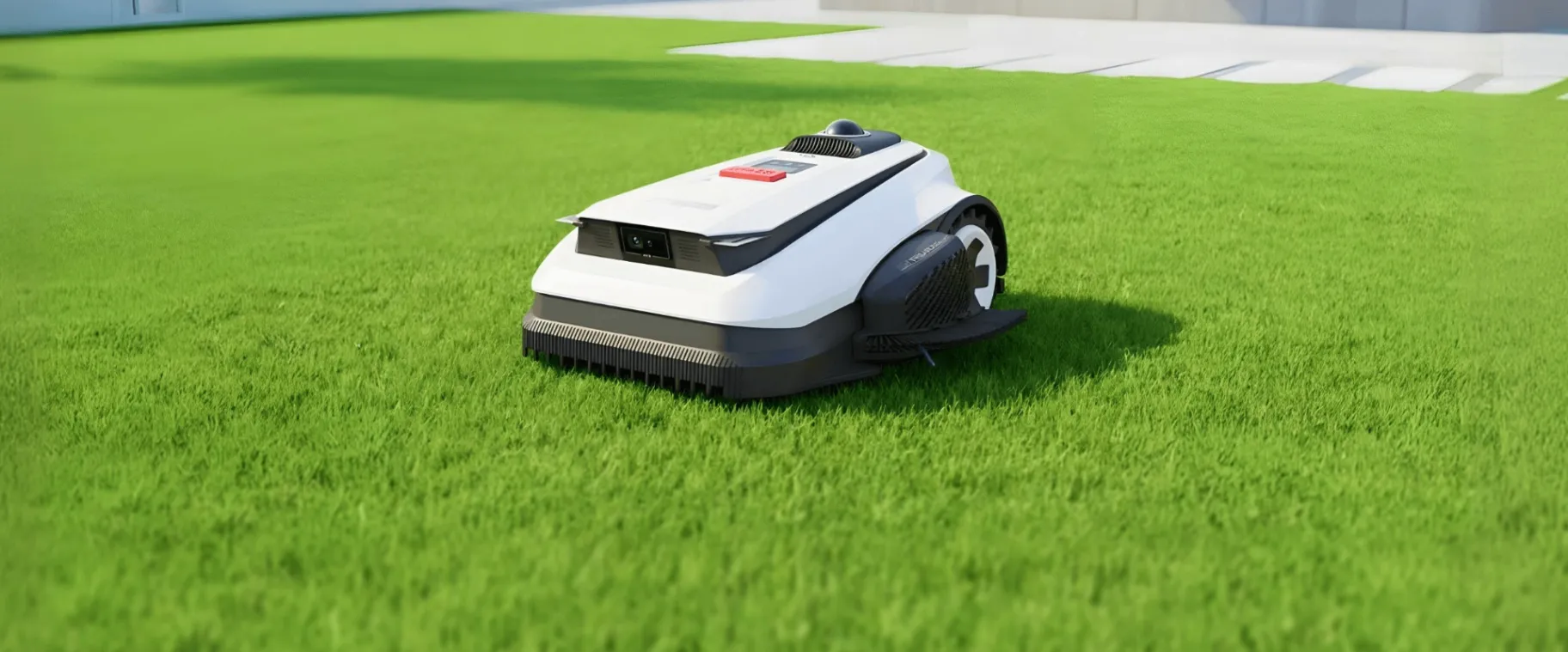
ECOVACS GOAT O1000
- Coverage
- ~0.25 acre (≈10,900 sq ft)
- Max slope
- ~20° (≈37%)
- AWD
- No
The GOAT O1000 borrows ECOVACS's vacuum DNA: lidar plus vision gives it the most confident obstacle handling of any small wire-free mower.
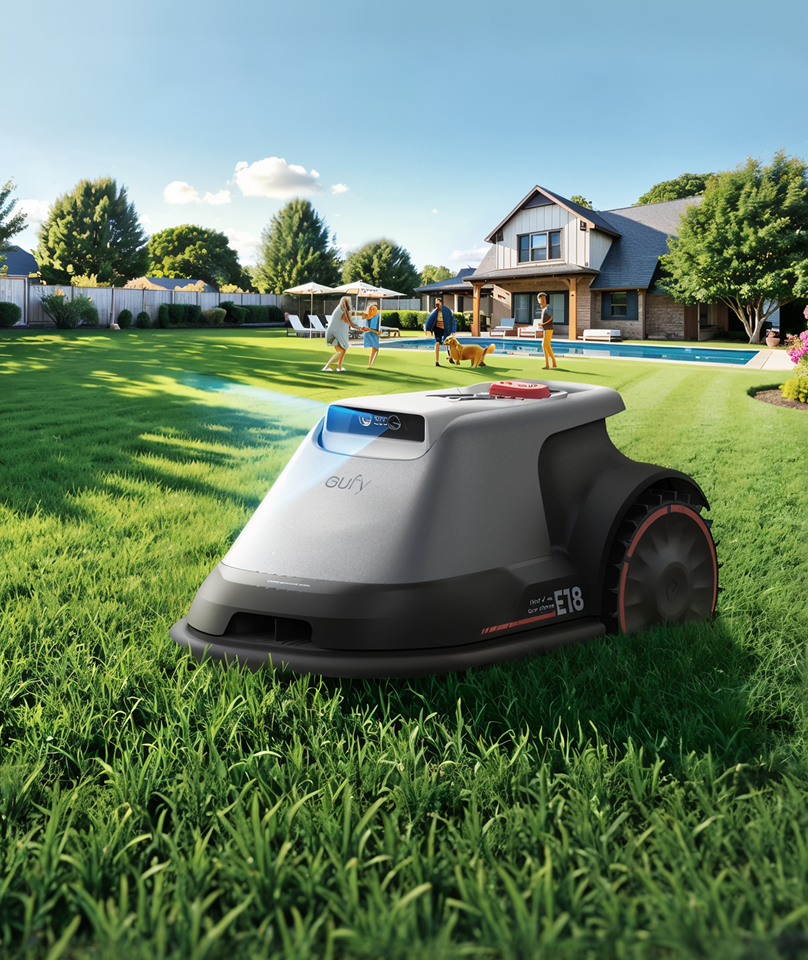
eufy Robot Mower E15
- Coverage
- ~0.2 acre (≈8,700 sq ft)
- Max slope
- ~20° (≈36%)
- AWD
- No
If quiet matters — early mornings, fussy neighbors, an HOA — the eufy E15 is the easiest robot mower in this list to live with.
Related guides
- How Do Robot Lawn Mowers Work? Plain-English Guide
A neutral, jargon-free walkthrough of what's actually going on inside the dock, on the lawn, and in the app.
- Are Robot Lawn Mowers Worth It? 2026 Cost Breakdown
Five-year math against a gas mower and a lawn service — with real American pricing, not press-release numbers.
- Best Robot Mowers for Steep & Sloped Yards (AWD Explained)
Slope percent vs. degree, why AWD matters, and which mowers actually keep their grip on real American hill yards.
- See our full ranking of the best robot mowers →