Robot Mowers for 1/2 Acre to 1 Acre: Coverage Reality Check
Why rated coverage and real-world coverage are two different things — and how to read the spec sheet honestly.
If you’ve spent any time shopping for a robot mower half acre solution, you’ve probably noticed that many manufacturers slap a "1-acre" sticker on a machine that looks barely larger than a toaster. It’s natural to be skeptical. While the technology has improved drastically in the last three years, there is a persistent gap between a mower’s laboratory-rated capacity and how much grass it can actually keep short in a yard with a playset, a slope, and a thick patch of Kentucky Bluegrass.
The short answer is this: If you have exactly a half-acre of grass, buying a mower rated for exactly a half-acre is usually a mistake. To get a clean cut without the mower running 24/7, you generally want to "buy up." For a half-acre lot, you should be looking at mid-range machines rated for roughly 0.75 to 1.0 acre to account for battery degradation, weather, and complex landscaping.
The "Perfect Square" Fallacy
When a manufacturer like Husqvarna or Worx rates a mower for a specific acreage, they are typically basing that number on an idealized scenario. Imagine a perfectly flat, square, obstacle-free field of thin grass with a charging station dead-center. In this vacuum, the mower runs until the battery is at 15%, charges, and immediately resumes.
Your yard isn't a vacuum. Every time the mower has to navigate around a birdbath, back out of a tight corner, or struggle up a 20-degree incline, it consumes more battery than it would on a straight line. If you have a "complex" yard—meaning multiple zones separated by narrow paths or lots of "islands" like trees and flower beds—your effective coverage can drop by as much as 30%. For a robot mower half acre project, a machine rated for 0.5 acres might struggle to finish the entire lawn before the first section needs cutting again.
Wire vs. Wireless: How Navigation Impacts Capacity
The type of navigation your mower uses significantly changes how it handles larger lots. Historically, mowers like the Worx Landroid or the entry-level Automowers used "random path" navigation. They bounce around like a Roomba until they hit a wire, then turn. This is inefficient. On a half-acre to one-acre lot, a random mower has to work significantly longer hours to ensure it hasn't missed any patches.
Newer, "systematic" mowers use GPS-RTK (like the Mammotion LUBA 2 or Segway Navimow) or LiDAR (like the Ecovacs Goat) to mow in straight, parallel lines.
- Random Mowers: Better for smaller, fenced-in suburban lots where "perfection" isn't the goal.
- Systematic Mowers: Essential once you cross the half-acre mark. Because they know exactly where they’ve been, they can cover the same area in about a third of the time, leading to less wear and tear on the motors and battery.
The Battery Math at the 1-Acre Mark
Battery life is the ultimate bottleneck. Most mowers in the mid-range—which usually sit in the mid-to-high four-figure price bracket—run for about 60 to 120 minutes before needing a 60-to-90-minute charge.
If you have a full acre, a mower with a small battery will spend half its day sitting at the charging station. This becomes a problem during the "spring flush" when grass grows at its fastest. If your mower can’t keep up with the growth because it’s constantly charging, your lawn will start to look shaggy. This is why we often suggest that for a one-acre property, you look at high-capacity models like the Mammotion LUBA 2 AWD 5000 or the Husqvarna 430X. These machines have the "gas tank" necessary to stay out in the field longer.
Edge Cutting and Obstacle Avoidance
As you scale up from a small patch of grass to a half-acre or more, the "nuisance" factors of robot ownership scale up too. On a small 0.1-acre lot, if the mower gets stuck on a stray toy, it’s a thirty-second walk to fix it. On a suburban acre, hunting for a stranded mower in the back corner of the lot every afternoon becomes a chore.
Pro Tip: Look for mowers with active obstacle avoidance (using cameras or lasers). Brands like Eufy and Ecovacs are leaning heavily into "vision" systems. This is crucial for larger lots where you can't be expected to do a "sweep" for dog toys or fallen branches every single time the mower starts its shift.
Furthermore, consider the "edge." Most robot mowers leave a 4-to-6-inch strip of uncut grass against walls and fences. If you have a one-acre perimeter, that is a lot of string trimming. Some newer models, like the Worx Landroid "Cut to Edge" series or certain Anthbot Genie configurations, offset their blades to minimize this, but no robot is perfect yet.
Maintenance Realities for Larger Lots
A robot mower half acre setup requires more maintenance than a small townhome unit. It's simple physics: the blades are hitting more grass blades per day.
- Blade Rotations: On a half-acre+ lot, you should expect to swap or flip your razor blades every 3-4 weeks during peak season to maintain a clean cut.
- Tire Wear: If your acre has hills, look for All-Wheel Drive (AWD) units. Front-wheel or rear-wheel drive mowers tend to "scuff" the turf when trying to turn on inclines, which can lead to bald spots over a long season.
- Firmware Updates: Wireless (RTK) mowers live and die by their signal. Ensure your half-acre has a clear view of the sky, or you'll be dealing with "Signal Lost" notifications more often than you'd like.
Bottom Line
If you are shopping for a robot mower half acre solution, don't buy a machine rated for exactly 0.5 acres unless your yard is a flat, perfect rectangle. For a half-acre, aim for a mower rated for 0.75 acres; for a full acre, look at machines rated for 1.25 to 1.5 acres. You are paying for the peace of mind that the mower can finish its job in a single day, leaving your lawn open for pets, kids, and actual enjoyment.
Best for Large Yards
Read now →Mowers mentioned
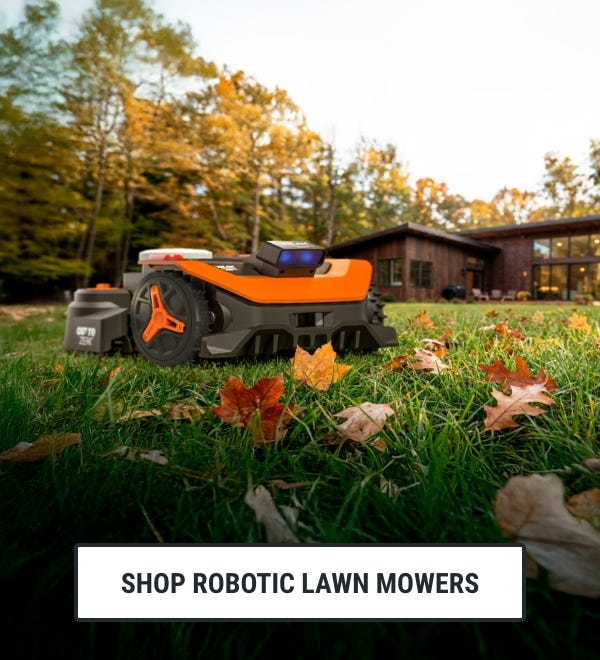
WORX Landroid Vision L
- Coverage
- Up to ~1 acre (≈43,500 sq ft)
- Max slope
- ~20° (≈35%)
- AWD
- No
The Vision L makes a one-acre wire-free yard achievable for the price of a mid-tier RTK mower — and you don't need to mount an antenna.
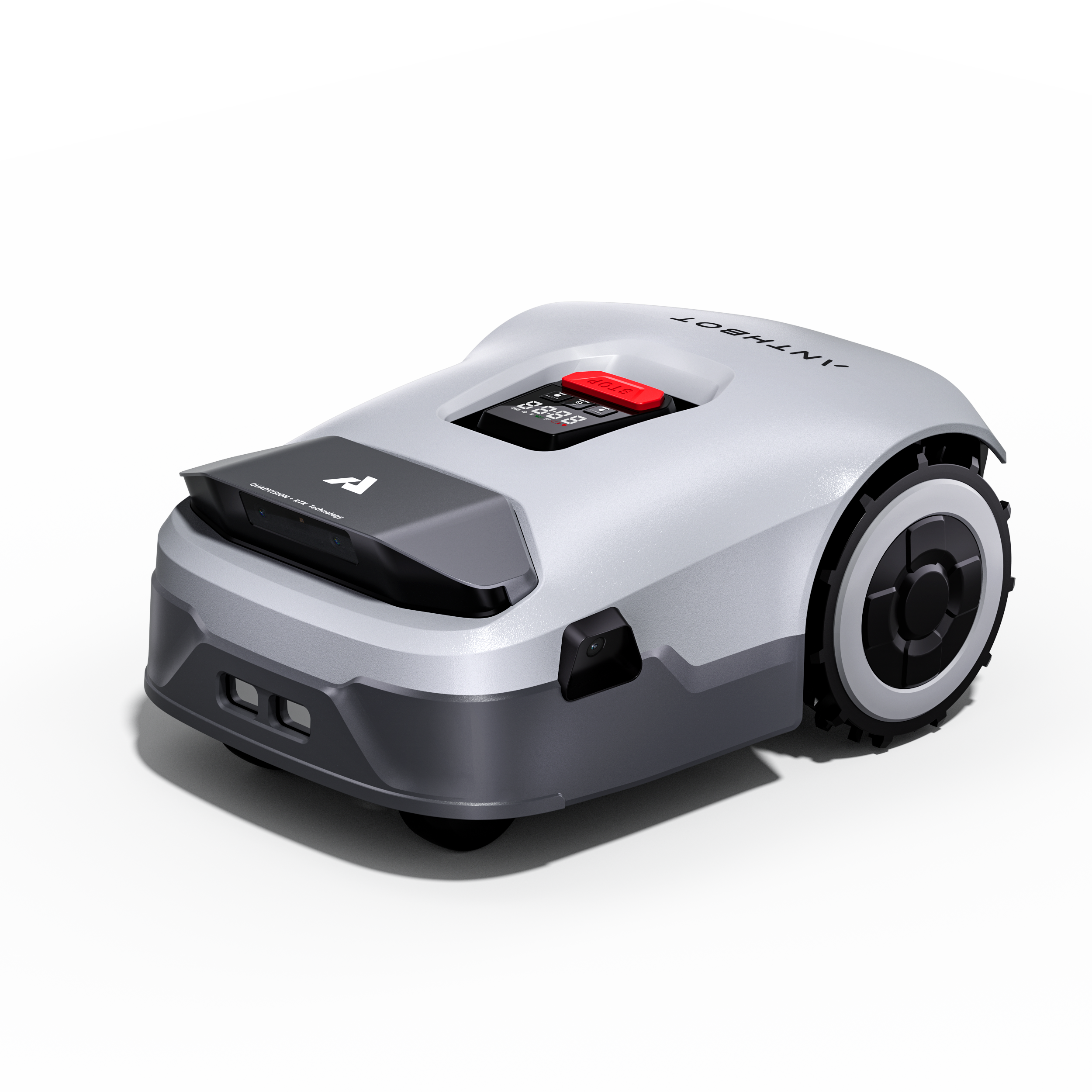
ANTHBOT Genie 3000
- Coverage
- ~0.9 acre (≈39,000 sq ft)
- Max slope
- ~45% grade
- AWD
- No
The ANTHBOT Genie 3000 is the dark-horse wire-free pick: nearly an acre of coverage and 45% slope rating at a price that undercuts every premium competitor.
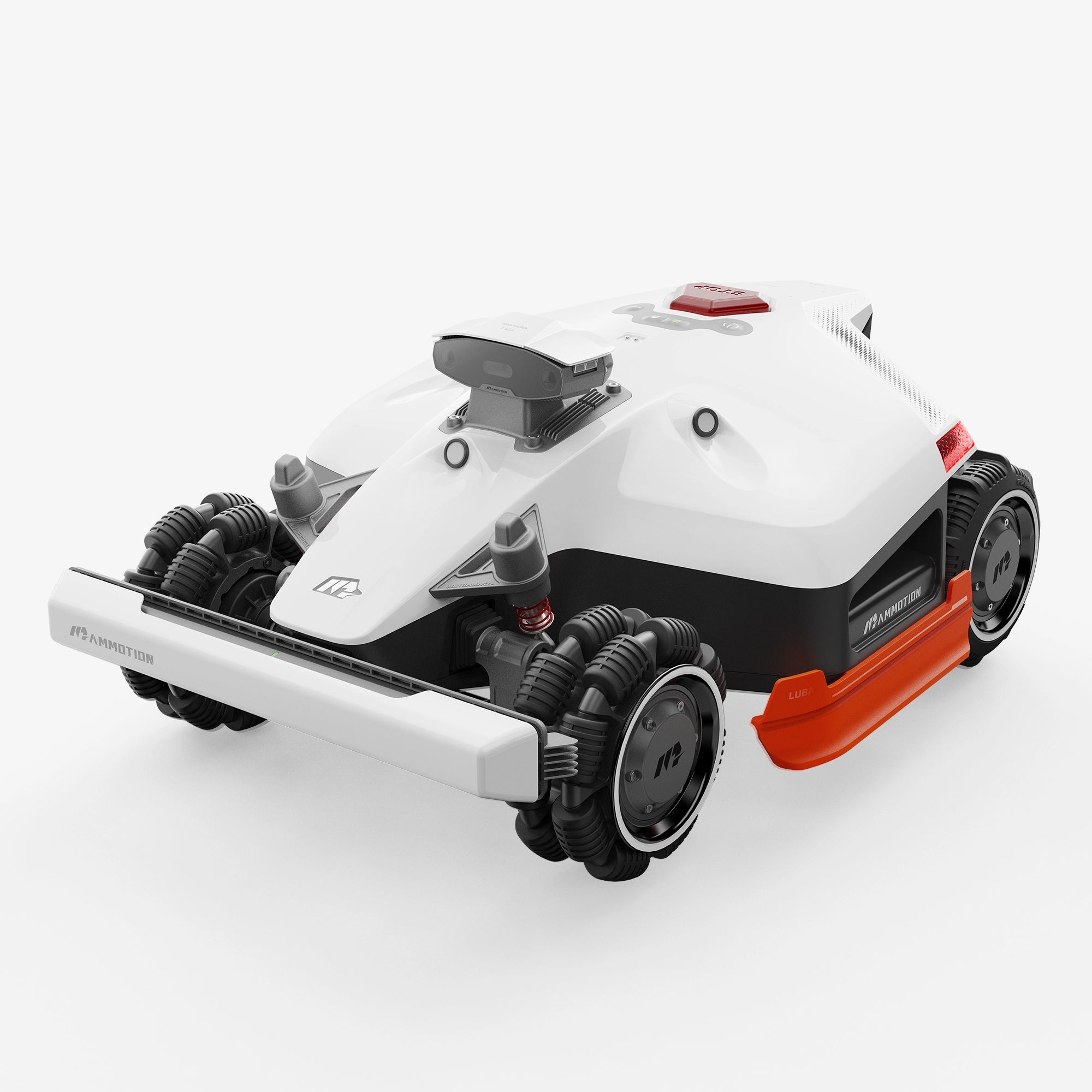
Mammotion LUBA 2 AWD 5000
- Coverage
- Up to ~1.25 acre (≈54,000 sq ft)
- Max slope
- ~38° (≈78%)
- AWD
- Yes
The LUBA 2 AWD 5000 is the wire-free mower for owners of a full acre with hills. Few competitors combine that coverage with serious slope rating.
Related guides
- How Do Robot Lawn Mowers Work? Plain-English Guide
A neutral, jargon-free walkthrough of what's actually going on inside the dock, on the lawn, and in the app.
- Are Robot Lawn Mowers Worth It? 2026 Cost Breakdown
Five-year math against a gas mower and a lawn service — with real American pricing, not press-release numbers.
- Best Robot Mowers for Steep & Sloped Yards (AWD Explained)
Slope percent vs. degree, why AWD matters, and which mowers actually keep their grip on real American hill yards.
- See our full ranking of the best robot mowers →