Can a Robot Mower Replace My Lawn Service?
Where a robot mower really substitutes for the truck-and-trailer crew, and where it just doesn't.
If you are tired of the early-morning wake-up call of a commercial zero-turn mower outside your bedroom window, or if you’re fed up with the price of gas surcharges, you’ve likely wondered: can a robot mower replace my lawn service? The short answer is yes, but it isn’t a one-for-one swap. A robot mower is excellent at maintaining a consistent carpet of grass, but it isn’t a landscaper; it won't trim your bushes, blow the leaves off your driveway, or notice that your hydrangeas have a fungal infection.
Whether a robot mower can truly replace your lawn service depends on how much "hands-on" yard work you actually enjoy doing. For many homeowners, the robot handles 90% of the heavy lifting, leaving only 10% for a quick Saturday morning trim. For others, that 10% is still too much. Here is the reality of making the switch from a crew to a bot.
The Math: Upfront Cost vs. Monthly Fees
The first thing to consider is the financial break-even point. A professional lawn service for a quarter-acre lot typically costs between a small amount and a small amount per visit in most US markets. Over a six-month growing season, you’re looking at well over a grand per year.
A solid entry-level or mid-range robot mower—like a Worx Landroid or the newer Segway Navimow i Series—usually lands in the low-to-mid four figures. If you move up to a dual-blade powerhouse for larger properties, like the Mammotion LUBA 2, you’re stepping into the mid-to-high four-figure range.
Even with the initial investment and the occasional cost of replacement blades (usually about a small amount a year), most robot mowers pay for themselves in 18 to 24 months. If you plan on living in your home for more than two years, the robot is almost always the cheaper financial bet.
The Quality of the Cut
One area where the robot mower actually beats a professional crew is the health of the grass. A lawn service usually comes once a week. If it rains for three days straight, they might skip a week, leading to "clumping" and "scalping" when they finally do show up with high-pressure heavy machinery.
Robot mowers, like the Husqvarna Automower or the Ecovacs Goat G1, operate on the principle of "little and often." They cut just a few millimeters of grass every single day. These tiny clippings fall back into the soil as natural fertilizer (mulching). Because the mower is lightweight, you don't get the ruts or soil compaction common with heavy gas mowers. After a month under robotic care, most lawns actually look thicker and greener than they ever did under a professional crew.
The "Gap" Tasks: What the Robot Won't Do
This is where the "robot mower replace lawn service" dream hits a snag. A robot mower is a mower, not a groundskeeper. A typical lawn crew usually provides a "mow, edge, and blow" service.
- Edging and Trimming: While some models like the Worx Landroid have a "cut to edge" feature, none can perfectly trim grass against a brick wall or around a mailbox post. You will still need a string trimmer.
- Leaf Removal: Some newer models, like the yuka-2000" class="text-primary font-medium hover:underline">Mammotion Yuka, are starting to include sweeping attachments for leaves. However, most robots will simply ride over a pile of leaves or mulch them into the grass. They won't bag them and haul them away.
- Debris Management: If a storm blows a large branch into your yard, a human mower operator will pick it up. A robot mower will either bump into it and stop, or try to climb it and get stuck.
- Flower Bed Maintenance: A lawn service often offers weeding and mulching as add-ons. You’ll be on your own for that.
Perimeter Tech: Wires vs. Satellites
If you decide to ditch the crew, the biggest hurdle is installation. Historically, this meant burying a "boundary wire" around your entire yard. If you have a complex yard, this job is a headache, though companies like Husqvarna offer professional installation services to handle it for you.
The newer generation of mowers, such as the Segway Navimow, EcoFlow Blade, and Anthbot Genie, use RTK-GPS (Real-Time Kinematic) technology. These are "wire-free." You drive them around the perimeter like a remote-control car to set the map. If your yard has heavy tree cover or tall buildings that block satellite signals, you might still need a wired model or a vision-based system like the Eufy S1 Pro or Ecovacs Goat.
Pro Tip: Before firing your lawn service, walk your property and look at your sky view. If you have a thick canopy of old-growth oaks, an RTK-GPS mower might struggle, making a traditional wired mower a more reliable choice.
Maintenance and Reliability
When your lawn service's mower breaks, it's their problem. When your robot mower has a software glitch or a dull blade, it’s your problem.
Modern robots are generally reliable, but they aren't "set it and forget it" for life. You’ll need to flip the mower over every few weeks to clean out dried grass and check the blades. You might occasionally have to "rescue" it if it gets high-centered on a stray dog toy or a rogue pinecone. If you are the type of person who hates any kind of mechanical puttering, you might find the "troubleshooting" aspect of robot ownership more annoying than just writing a check to a lawn crew.
Bottom Line
A robot mower can absolutely replace a lawn service if you are willing to spend 15 minutes a week doing your own string trimming and checking for yard debris. It will save you thousands of dollars over the life of the machine and likely provide a healthier-looking lawn, but it won't save you from ever having to lift a finger in the yard again. ---
Best Mowers
Read now →Mowers mentioned
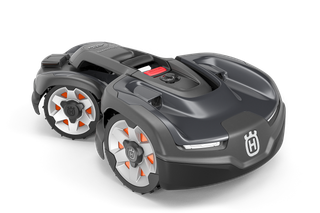
Husqvarna Automower 415X
- Coverage
- ~0.4 acre (≈17,000 sq ft)
- Max slope
- ~22° (≈40%)
- AWD
- No
Boring in the best way. Husqvarna's 415X has been polished over a decade of Automower releases — set it up once and it runs for years.
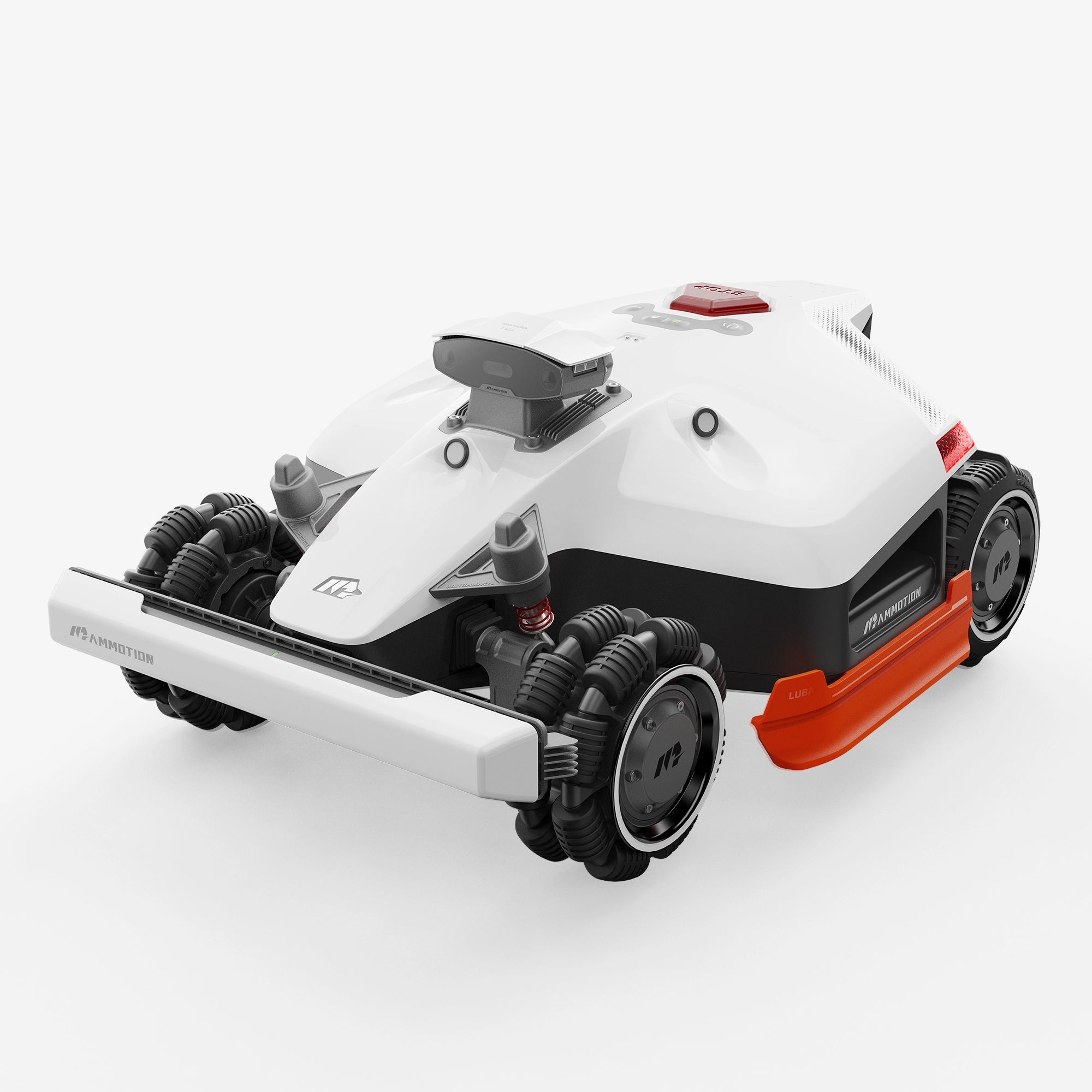
Mammotion LUBA 2 AWD 5000
- Coverage
- Up to ~1.25 acre (≈54,000 sq ft)
- Max slope
- ~38° (≈78%)
- AWD
- Yes
The LUBA 2 AWD 5000 is the wire-free mower for owners of a full acre with hills. Few competitors combine that coverage with serious slope rating.
Related guides
- How Do Robot Lawn Mowers Work? Plain-English Guide
A neutral, jargon-free walkthrough of what's actually going on inside the dock, on the lawn, and in the app.
- Are Robot Lawn Mowers Worth It? 2026 Cost Breakdown
Five-year math against a gas mower and a lawn service — with real American pricing, not press-release numbers.
- Best Robot Mowers for Steep & Sloped Yards (AWD Explained)
Slope percent vs. degree, why AWD matters, and which mowers actually keep their grip on real American hill yards.
- See our full ranking of the best robot mowers →