Why Is My Robot Mower Leaving Uncut Patches? (Fixes)
Six causes, ranked from most to least common — and the diagnostic steps to find which one is yours.
If you bought a robot mower to reclaim your weekends, nothing sours the deal faster than looking out at your lawn and seeing "mohawks" of tall grass or random shaggy circles in the middle of a freshly cut yard. You bought a high-tech solution, but right now, your lawn looks like it was mowed by a distracted teenager.
The short answer is usually one of three things: dull blades, a boundary wire that’s too far from obstacles, or "GPS shadow" causing the mower to lose its place. Finding a robot mower uneven patches fix doesn't usually require a degree in robotics, but it does require a bit of detective work. Here is how to diagnose and fix the six most common causes of uneven cutting.
1. The Blades are Dull (or Gunked Up)
This is the "did you plug it in?" of the robot mower world. Unlike a traditional gas mower with one heavy steel blade, most robots—like the Husqvarna Automower or Worx Landroid—use small, razor-like blades on a spinning disk.
Because these blades are lightweight, they rely on a sharp edge to slice the grass. Once they get dull, they start to "slap" the grass down rather than cutting it. Even worse, if you have a lot of sap or wet clippings, the blades can get stuck in a retracted position, meaning they don't swing out when the disk spins.
The Fix: Flip the mower over (power it off first!) and check the blades. If they feel rounded or are covered in a layer of dried green sludge, swap them out. They are cheap and should be replaced every 1-3 months depending on your grass type.
2. Signal "Dead Zones" and GPS Shadow
If you own a modern wire-free mower like the Segway Navimow or the Mammotion LUBA 2, you are relying on RTK-GPS signals. These mowers are incredible until they get near a tall brick wall, a dense canopy of oak trees, or a narrow alley between the house and the fence.
When the mower loses its satellite lock, it will often stop, "hunt" for a signal, or skip a section to move to an area with better reception. This leaves behind those frustrating islands of uncut grass.
The Fix: Check your mower’s app for a "signal map." If the patches always appear in the same spot near the house or under a tree, that's your culprit. You may need to move your GNSS antenna to the roof or a higher pole to get a clearer view of the sky.
3. Perimeter Wire Offset Issues
For those using traditional "wired" mowers like the Worx Landroid, the mower follows a buried or pegged wire. The mower is programmed to stop several inches before the wire to avoid hitting a fence or falling off a curb. If that wire is placed too far from the edge, or if your "edge cut" settings are too conservative, you’ll end up with a shaggy perimeter.
The Fix: Most apps allow you to adjust the "drive past wire" distance. Increasing this by just two or three inches can solve the problem, provided there isn't a hard obstacle in the way. If there is, you’ll simply have to accept that a robot mower cannot defy physics—you’ll be doing a five-minute string trim once a week.
4. The Grass Is Growing Too Fast
This is particularly common in the spring. If you have "pushed" your lawn with high-nitrogen fertilizer and it's raining every other day, the grass might be growing faster than the robot can keep up with. Most robots are designed to maintain a lawn, not mow it from scratch. If the mower is only scheduled to run a few hours a day, it might take three days to cover the whole yard. By the time it gets back to the start, the grass is already shaggy again.
The Fix: During the peak growing season, increase the mower's working hours. A robot mower is meant to work almost every day. If you see patches, your robot mower uneven patches fix might be as simple as changing the schedule from "4 hours a day" to "8 hours a day."
5. Slopes and Traction Issues
If your yard has a steep incline, the mower might be "crabbing" or sliding slightly as it tries to navigate the hill. When a mower loses traction—common with rear-wheel-drive models on wet grass—the internal sensors get confused about where the mower actually is. It thinks it covered a patch of grass, but in reality, the wheels were just spinning in place.
The Fix: Check the wheels for "clogging." If the tread is filled with mud, it’s a sled, not a mower. Some brands, like Husqvarna, sell "terrain kits" with heavier, spiked wheels specifically to solve this. If you have a particularly hilly yard, the AWD Mammotion LUBA is often the go-to recommendation because it won't slip where others do.
6. Complex Yard Geometry
Robot mowers that use a "random bounce" pattern (the most common type for entry-level models) rely on the laws of probability to hit every blade of grass. If your yard has a "bottleneck"—a narrow strip of grass connecting two larger areas—the mower might struggle to find its way into the second area often enough. It spends 90% of its time in the main yard and only 10% in the side yard, leading to uneven growth.
The Fix: Look into "starting points" or "zones" in your mower’s app. You can usually tell the mower to follow the boundary wire for a specific distance (e.g., 50 feet) before it starts mowing. This forces it to begin its work in the neglected area.
Bottom Line
Most robot mower patches are caused by dull blades or an insufficient mowing schedule. Start by swapping your blades and bumping up the daily run-time; if the patches persist, look for signal dead zones or traction slips in the specific areas where the grass remains tall.
Buying Guide
Read now →Mowers mentioned
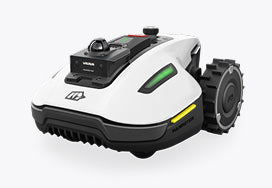
Mammotion YUKA 2000
- Coverage
- ~0.5 acre (≈22,000 sq ft)
- Max slope
- ~27° (≈50%)
- AWD
- No
The YUKA 2000 reads more like a robotic groundskeeper than a mower. Dual discs plus a clipping sweeper give it the cleanest finish in the wire-free class.
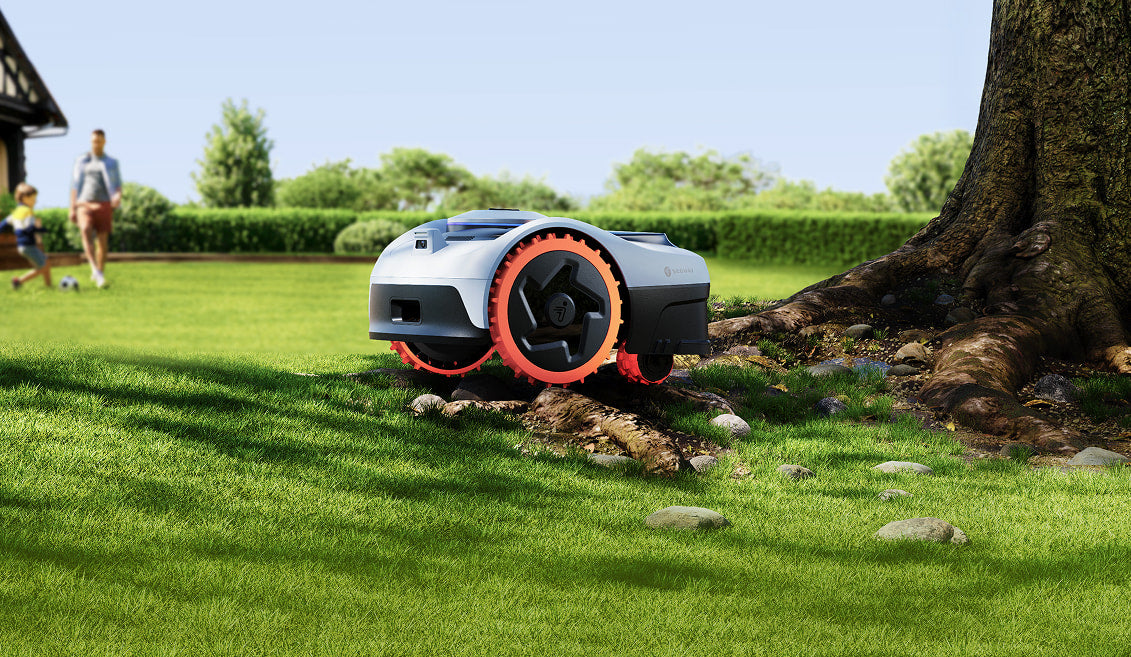
Navimow i108E
- Coverage
- ~0.2 acre (≈8,700 sq ft)
- Max slope
- ~24° (≈45%)
- AWD
- No
If your lawn is up to about an eighth of an acre and you want the simplest wire-free experience on the market, the i108E is hard to beat.
Related guides
- Can Robot Mowers Handle Wet Grass? What Actually Happens
The honest answer the manufacturer pages skip — including what wet grass does to blades, decks, and your stripes.
- Do You Still Need to Edge With a Robot Mower?
Why there's a strip near your fence the mower never seems to touch — and the three ways to fix it.
- Robot Mowers and Leaves: Do They Mulch in Fall?
Yes, no, and "it depends on how thick" — plus the fall maintenance moves that protect your blades.
- See our full ranking of the best robot mowers →