Can Robot Mowers Handle Wet Grass? What Actually Happens
The honest answer the manufacturer pages skip — including what wet grass does to blades, decks, and your stripes.
It’s a common Saturday morning dilemma for human mowers: the grass is long, but the dew is heavy or a light drizzle just passed through. Most of us wait for the sun to baked the lawn dry because pushing a heavy gas mower through soggy turf is a recipe for clumps and a stained driveway. But with a robot, the rules feel different. If it’s automated, shouldn't it just handle the weather?
The short answer is yes, most robot mowers work on wet grass—but just because they can doesn't mean they should. While your robot won't melt in the rain, mowing during or immediately after a downpour introduces a specific set of maintenance headaches and aesthetic trade-offs that the glossy marketing brochures usually gloss over.
The "Rain Sensor" Paradox
If you look at the top of a Husqvarna Automower or a Worx Landroid, you’ll often find two small metal contacts. These are rain sensors. Their job is to tell the mower to head back to the charging station the moment things get slick.
If these mowers were truly "all-weather" without consequence, why would manufacturers include a feature designed to stop them from working? It’s because wet grass is the natural enemy of a clean cut. When grass is saturated, it becomes heavy and leans over. Instead of the razor-sharp blades slicing the blade of grass, they often slide over it or tear it. Once the sun comes out and the grass stands back up, you’re left with an uneven, shaggy look rather than that carpet-like finish you paid for.
The Under-Deck Disaster
The biggest trade-off of running your robot in the wet isn't what it does to the lawn, but what it does to the machine itself. Robot mowers use "mulching" technology—they cut tiny clippings that fall back into the soil.
When those clippings are dry, they disappear. When they’re wet, they turn into a thick, green paste. This paste sticks to the underside of the cutting deck and builds up around the blade disk. Over a few days of wet mowing, this buildup can:
- Reduce battery life: The motor has to work harder to spin a disk weighed down by five pounds of wet pulp.
- Hinder blade movement: On brands like Segway or Husqvarna that use pivoting blades, the "muck" can actually cement the blades in place so they no longer spin freely.
- Create a smell: Fermenting grass trapped under a warm plastic shell smells exactly as bad as you’re imagining.
If you insist on mowing in the rain, prepare to flip the mower over at least once a week to scrape out the deck with a plastic putty knife.
Traction and "Trenching"
Most robot mowers are relatively light, but they have small wheels with aggressive treads to help them climb hills. On a dry lawn, this is fine. On a saturated lawn, your robot can turn into a miniature rototiller.
We see this most often with boundary-wire models. When the mower reaches the edge of your property and needs to perform a "zero-turn" to stay in bounds, the wheels can spin. On wet soil, those spinning wheels quickly strip the grass away, leaving muddy bald spots.
Newer RTK-GPS models, like the Mammotion LUBA or the Segway Navimow, are generally better at navigating without slipping, but even they aren't immune to "trenching" when trying to climb a wet 20-degree incline. If your yard has steep hills, you should almost certainly program your mower to stay home until the ground is firm.
The Blade Replacement Cycle
Standard mower blades on a "push" mower are thick chunks of steel. Robot mower blades are typically more like heavy-duty razor blades. They are designed to stay sharp by slicing through dry, brittle stalks.
Wet grass is surprisingly abrasive because it’s often coated in fine grit or sand kicked up by the rain. When robot mowers work on wet grass, their blades dull significantly faster. You might find yourself swapping out a set of blades every two weeks instead of every month. While a pack of blades is generally inexpensive (they often come in bulk packs for well under the cost of a tank of gas), the labor and the drop in "cut quality" are real factors to consider.
Notable Exceptions: Who Does It Best?
Not all robots are created equal when the clouds open up.
- Husqvarna Automower: Generally considered the gold standard for wet weather. Their electronics are exceptionally well-sealed, and they offer "fair weather" kits to help with traction.
- Mammotion LUBA 2: With its all-wheel drive, it handles the traction issues of wet grass better than almost any other consumer bot, though the deck still gets messy.
- Worx Landroid: These are lightweight and tend to struggle with traction in the mud, often "digging in" more than their heavier counterparts.
Newer entries like the EcoFlow Blade or the Ecovacs Goat G1 have decent weather sealing, but their focus remains on optimal dry conditions for their visual sensors to work correctly. Heavy rain can sometimes "blind" mowers that rely solely on cameras for obstacle avoidance.
Bottom Line: Should You Do It?
While you won't kill your robot by letting it run in a drizzle, you are signing up for more maintenance and a messier-looking lawn. For the best results, use the "Rain Delay" settings in your app to keep the mower docked until the grass has had at least a few hours to dry out. Your blade motor—and your grass—will thank you.
Buying Guide
Read now →Mowers mentioned
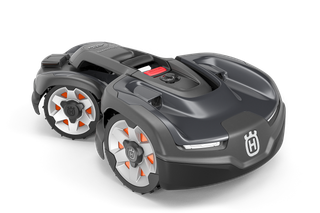
Husqvarna Automower 415X
- Coverage
- ~0.4 acre (≈17,000 sq ft)
- Max slope
- ~22° (≈40%)
- AWD
- No
Boring in the best way. Husqvarna's 415X has been polished over a decade of Automower releases — set it up once and it runs for years.
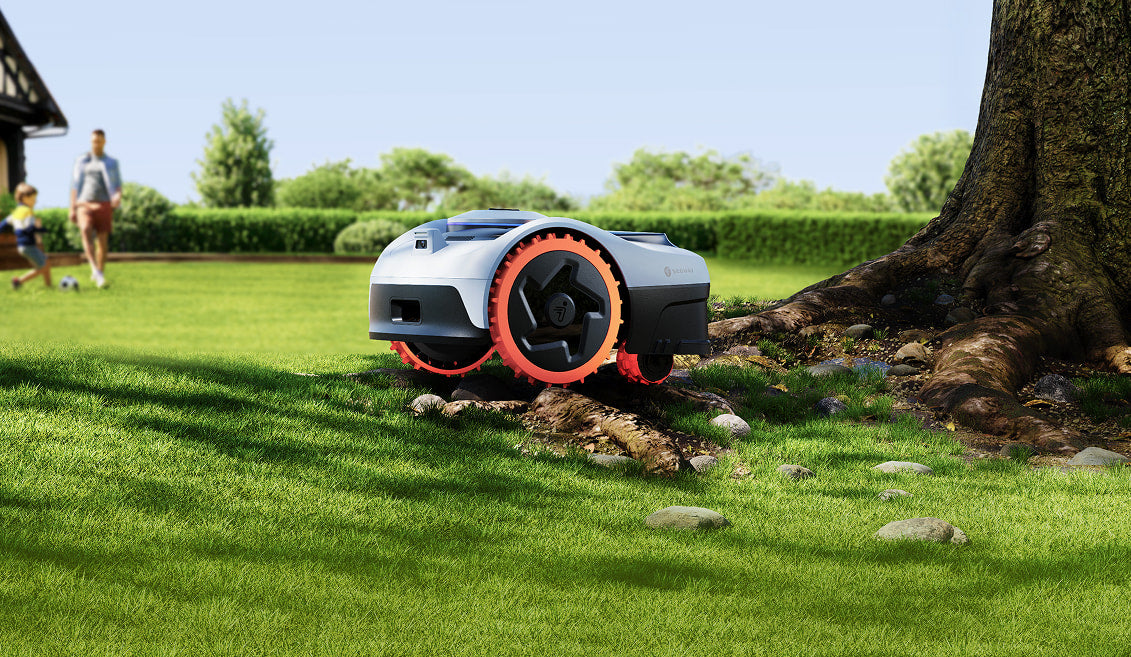
Navimow i108E
- Coverage
- ~0.2 acre (≈8,700 sq ft)
- Max slope
- ~24° (≈45%)
- AWD
- No
If your lawn is up to about an eighth of an acre and you want the simplest wire-free experience on the market, the i108E is hard to beat.
Related guides
- Do You Still Need to Edge With a Robot Mower?
Why there's a strip near your fence the mower never seems to touch — and the three ways to fix it.
- Why Is My Robot Mower Leaving Uncut Patches? (Fixes)
Six causes, ranked from most to least common — and the diagnostic steps to find which one is yours.
- Robot Mowers and Leaves: Do They Mulch in Fall?
Yes, no, and "it depends on how thick" — plus the fall maintenance moves that protect your blades.
- See our full ranking of the best robot mowers →