Wire vs. RTK GPS vs. Vision: Which to Buy
Three navigation systems, three trade-offs. A plain-English breakdown of which one fits your yard.
The short answer is that there is no "perfect" technology for every yard. If you have a simple rectangle with a white picket fence, a cheap wired model will work just fine. If you have a complex estate with massive oak trees, you’ll probably need a hybrid system that uses both GPS and cameras.
The industry is currently in the middle of a messy divorce from the perimeter wire. While "wire-free" is the marketing buzzword of the year, those systems come with their own set of headaches that your neighbor with the قدیم-school Husqvarna doesn't have to deal with. To pick the right one, you have to look at your yard’s canopy cover, your patience for troubleshooting, and your budget. Here is the reality of the wire vs gps robot mower debate in today’s market.
The Old Reliable: Perimeter Wire
The perimeter wire is exactly what it sounds like: a thin green wire buried or stapled around the edge of your lawn. It’s the same technology used in invisible dog fences. For a decade, this was the only way these machines worked.
The biggest pro is reliability. A wire doesn’t care if it’s cloudy, if you have a dense forest overhead, or if your house is three stories tall and made of stone. If the wire is intact, the mower knows exactly where the boundary is. Brands like the Worx Landroid or the classic Husqvarna Automower (the X-Line models) have perfected this over the years.
The obvious con is the installation. You’re going to spend a Saturday on your hands and knees pinning wire, or you’ll pay a dealer a few hundred dollars to use a professional cable layer. Also, if you’re a fan of aggressive aeration or have a curious puppy, wire breaks are an inevitability. Finding a break in 500 feet of buried wire is a special kind of Friday afternoon hell.
The New Standard: RTK-GPS
RTK (Real-Time Kinematic) GPS is why everyone is talking about robot mowers again. Standard GPS (like in your phone) is accurate to about 10 feet; RTK uses a stationary base station to "correct" that signal, bringing accuracy down to about an inch.
This is what you’ll find in the Segway Navimow or the Mammotion LUBA 2. You "drive" the mower around your yard like a remote-controlled car to set the map. It’s incredibly satisfying—until it isn't. RTK requires a clear line of sight to the sky for both the mower and its base station.
If you have a narrow side yard between two tall houses (the "urban canyon" effect) or massive, overhanging maple trees, the mower will lose its signal and stop dead. This is where most people get frustrated with "modern" mowers. If your yard is open and sunny, RTK is a dream. If you live in a forest, it might be a paperweight.
The Eyes on the Ground: Vision Navigation
To solve the "blackout" issues of GPS, some brands have added cameras. This is often called VSLAM (Visual Simultaneous Localization and Mapping). The Ecovacs Goat G1 uses beacons that act like indoor lighthouses, while the Eufy S1 Pro or the Anthbot Genie use cameras to "see" where they are.
Vision systems are fantastic for obstacle avoidance. A wired mower will blindly bump into a forgotten garden hose or a stray Croc; a vision-based mower like the Segway Navimow i Series sees it and steers around.
The trade-off? Vision-only systems can struggle in low light or "flat" environments. If your yard is just a sea of green with no distinct features (like trees, lawn furniture, or house walls), the camera might get "lost" because it has no landmarks to reference. Also, some people aren't wild about a camera-equipped robot patrolling their property, though most brands claim the data is processed locally and not stored in the cloud.
Hybrid Systems: The "Best of Both" Bet
Many of the flagship mowers hitting the market now—like the EcoFlow Blade or the newer yuka-2000" class="text-primary font-medium hover:underline">Mammotion Yuka—are trying to blend these technologies. They use RTK-GPS as the primary map, but they have cameras or LiDAR (laser scanning) to take over when the GPS signal drops under a tree.
These are generally the most expensive options, often pushing well into the mid-to-high four figures. However, for a complex yard with both open spaces and heavy shade, a hybrid system is usually the only way to go wire-free without constant "Mower Trapped" notifications on your phone.
Technical Trade-offs: A Quick Comparison
When you're weighing a wire vs gps robot mower purchase, consider these four factors:
- Setup Time: RTK and Vision take about 30 minutes of "driving" the mower. Wire takes 4 to 8 hours of physical labor.
- Yard Changes: If you dig a new flower bed, a GPS mower is updated in 5 minutes via the app. For a wired mower, you have to cut, splice, and re-route the physical cable.
- Reliability: Wired is 99% reliable. RTK is 95% reliable (depending on trees). Vision is still "maturing" but looks promising for urban yards.
- Price: Wired mowers remain the entry point, often found for well under the entry-level tier. Good RTK and Vision models typically start in the low four figures and go up from there.
Which One Should You Buy?
Don't let a salesperson talk you into the "latest and greatest" if it doesn't fit your land.
If you have a heavy tree canopy or a very small, simple yard, stick with a Perimeter Wire mower. It’s cheaper, and once the wire is in, it just works.
If you have a large, open lot with a clear view of the sky and you hate the idea of digging trenches, get an RTK-GPS model. It’s the most "hands-off" experience available today.
If you have a landscaped yard with lots of obstacles (kids' toys, dog poop, complex flower beds) but decent sky visibility, look for a Vision/RTK Hybrid like the Segway Navimow or Luba 2. The camera is worth the extra cost just to avoid the mower "eating" a dog toy.
Bottom Line
There is no longer a one-size-fits-all answer for mower navigation. If your yard is a clear field, go RTK; if it’s a forest, stick to the wire; and if it's a suburban obstacle course, bet on vision. Focus on your yard's specific obstacles rather than the flashy tech on the box.
Best Wire-Free
Read now →Mowers mentioned
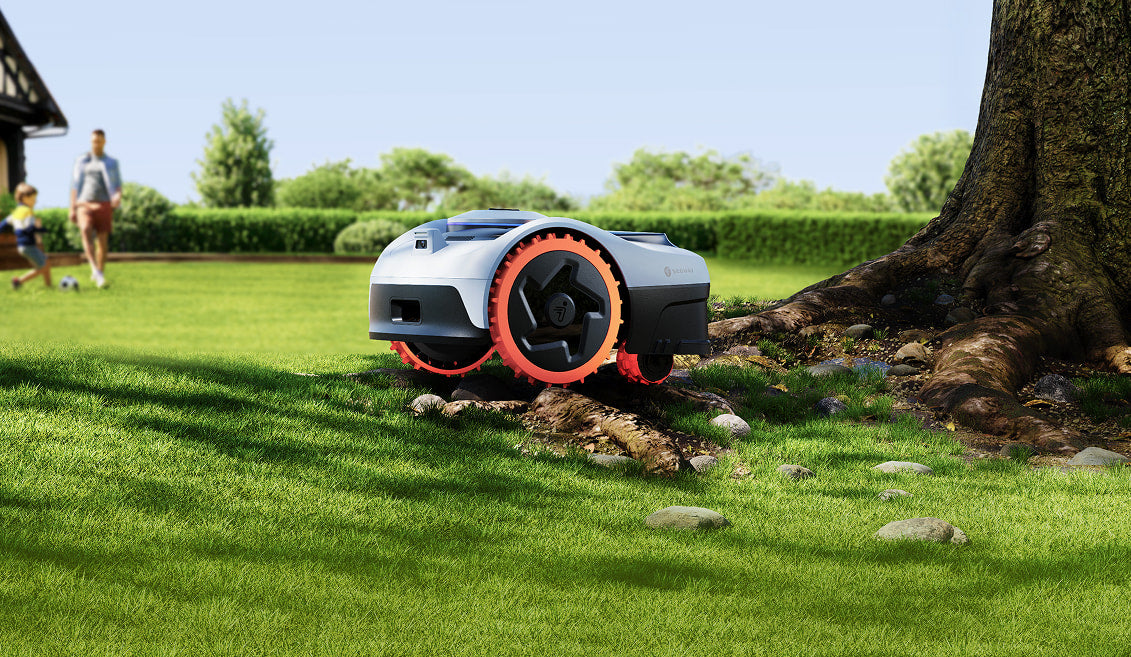
Navimow i108E
- Coverage
- ~0.2 acre (≈8,700 sq ft)
- Max slope
- ~24° (≈45%)
- AWD
- No
If your lawn is up to about an eighth of an acre and you want the simplest wire-free experience on the market, the i108E is hard to beat.
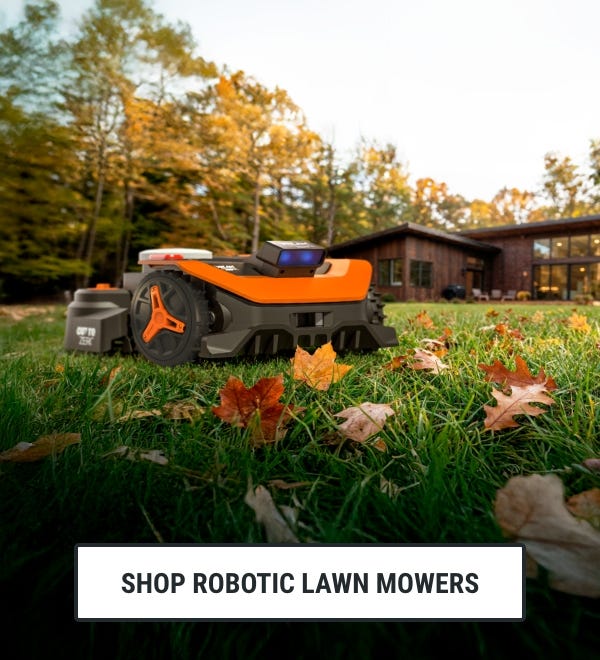
WORX Landroid L WR155
- Coverage
- ~0.5 acre (≈22,000 sq ft)
- Max slope
- ~20° (≈35%)
- AWD
- No
If you can stomach an afternoon of laying boundary wire, the WORX Landroid L WR155 is the most square footage per dollar you'll find from a name-brand mower.
Related guides
- Robot Mower vs. Gas Mower: 5-Year Cost Comparison
Up-front cost, fuel, oil, blades, electricity, and your time — all the line items, all the math.
- Boundary Wire vs. Wire-Free: Which Setup Is Less Hassle?
An honest head-to-head on install time, repair pain, and what happens when you re-landscape.
- Segway Navimow vs. Mammotion LUBA: Which Wire-Free Wins?
Two of the biggest wire-free brands, head to head on coverage, slope, app polish, and value.
- See our full ranking of the best robot mowers →