Husqvarna vs. Segway Navimow: Brand Trust vs. Wire-Free
The legacy brand against the wire-free upstart — where each one wins for different American buyers.
If you’ve been researching robot mowers for more than five minutes, you’ve hit the inevitable crossroads: Husqvarna vs Navimow. On one side, you have the Swedish heavyweight, Husqvarna, which basically invented this category thirty years ago. On the other, you have Segway, a tech company that entered the fray more recently with a "no perimeter wire" mission that shaken up the industry.
The short answer is a classic trade-off. Choose Husqvarna if you want a machine that is mechanically bulletproof, backed by a local dealer network, and willing to tackle complex, sloped terrain. Choose Segway Navimow if you are "done" with burying wires, want a slick app experience, and have a relatively open yard with a clear view of the sky. Here is how these two brands actually stack up in the real world.
The Hardware Legacy: Built for Yards vs. Built for Tech
Husqvarna’s Automower line is the gold standard for mechanical durability. Because they’ve been doing this since the 90s, they have solved the "little things" that the newer brands are still figuring out—like how to keep grass clippings out of the chassis and how to seal electronics against a humid South Carolina summer. Their chassis feel like outdoor power equipment; they are rugged, repairable, and built to live outside for a decade.
Segway’s Navimow, particularly the newer i-Series and H-Series, feels more like a piece of consumer electronics. It’s polished, modern, and looks great on a driveway. While the build quality is impressive for the price, Segway doesn't have the 30-year track record of longevity that Husqvarna does. However, Segway wins on the cutting interface; their height adjustment is usually handled via the app, whereas many mid-range Husqvarnas still require you to turn a literal dial on the machine.
The Big Debate: Boundary Wires vs. RTK-GPS
The core of the husqvarna vs navimow debate is how the robot knows where to go.
Historically, Husqvarna built its empire on the "boundary wire"—a low-voltage wire you bury around the edge of your lawn. It’s a pain to install, but once it's in, it is 100% reliable. It doesn't care if you have thick tree cover or if you live in a canyon. Husqvarna does now offer "EPOS" (Exact Positioning Operating System) which is wire-free, but it’s typically reserved for their higher-end professional models which can jump into the mid-to-high four figures.
Segway Navimow is "wire-free" by default across their entire lineup. They use RTK-GPS (Real-Time Kinematic) combined with "VisionFence" (a camera) to navigate.
- The Pro: You "drive" the mower around your yard with your phone to set the map. No digging, no broken wires from the aerator.
- The Con: If your yard is heavily shaded by massive oak trees or nestled right against a three-story brick wall, the GPS signal can drop. While Segway's camera helps fill those gaps, it isn't always as foolproof as a physical wire.
Slope Performance and Tricky Terrain
If your backyard looks like a ski slope, the choice becomes much narrower. Husqvarna has mastered the "all-wheel drive" (AWD) robot mower. Models like the 435X AWD can climb grades up to 70%, which is essentially a cliff in mowing terms. Even their standard front-wheel-drive units handle wet, slippery inclines better than most.
Segway’s H-Series is a capable climber, and their tires provide decent grip, but they generally top out at around 45% inclines. More importantly, Segway’s software is a bit more "cautious." If the mower loses its precise GPS positioning on a hill, it may stop for safety, whereas a wired Husqvarna will just keep chugging along the perimeter wire regardless of the sky view.
Support: Dealers vs. DIY
This is the "neighborly advice" part of the comparison that people often overlook.
When a Husqvarna breaks, you put it in your trunk and drive it to a local dealer. There are thousands of them across the US. They have the parts on the shelf and the diagnostic software to fix it. That peace of mind is why many American homeowners are willing to pay the premium for an Automower.
Segway is primarily a direct-to-consumer or big-box retail play. While they have been rapidly expanding their support and adding service centers, you are more likely to be dealing with an online ticket system or shipping the unit back if something catastrophic happens. If you are tech-savvy and comfortable troubleshooting via an app, Segway is a great value. If you want a "guy" you can call when the mower hits a stray rock, Husqvarna is the way to go.
Pricing and Value Proposition
In the husqvarna vs navimow price wars, Segway currently holds the lead for the "entry-level" buyer. Their i-Series has brought wire-free mowing down to a price point that rivals high-end gas mowers, often sitting well under the the mid-tier range mark for smaller suburban lots.
Husqvarna sits in a wide range. You can find entry-level wired models in the low four figures, but their wire-free EPOS models and high-capacity 400-series units usually command a significant premium. You aren't just paying for the mower; you're paying for the dealer network and the proven reliability of the drive motors and battery management systems.
Which One Is For You?
Choose Segway Navimow if: You have a relatively flat, open yard with a clear view of the sky, you hate the idea of burying wires, and you want the most "tech-forward" experience for the least amount of money.
Choose Husqvarna Automower if: You have a complex yard with heavy tree cover, steep hills, or if you simply value the "buy it for life" support of a local dealership network.
Bottom Line
The husqvarna vs navimow choice comes down to your property's "sky visibility" and your appetite for DIY. Segway offers the best "modern" experience for an affordable price, while Husqvarna remains the undisputed king of reliability and difficult terrain.
Best Mowers
Read now →Mowers mentioned
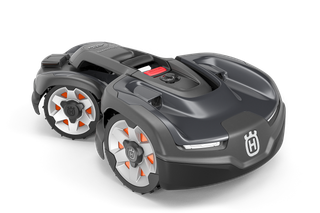
Husqvarna Automower 415X
- Coverage
- ~0.4 acre (≈17,000 sq ft)
- Max slope
- ~22° (≈40%)
- AWD
- No
Boring in the best way. Husqvarna's 415X has been polished over a decade of Automower releases — set it up once and it runs for years.
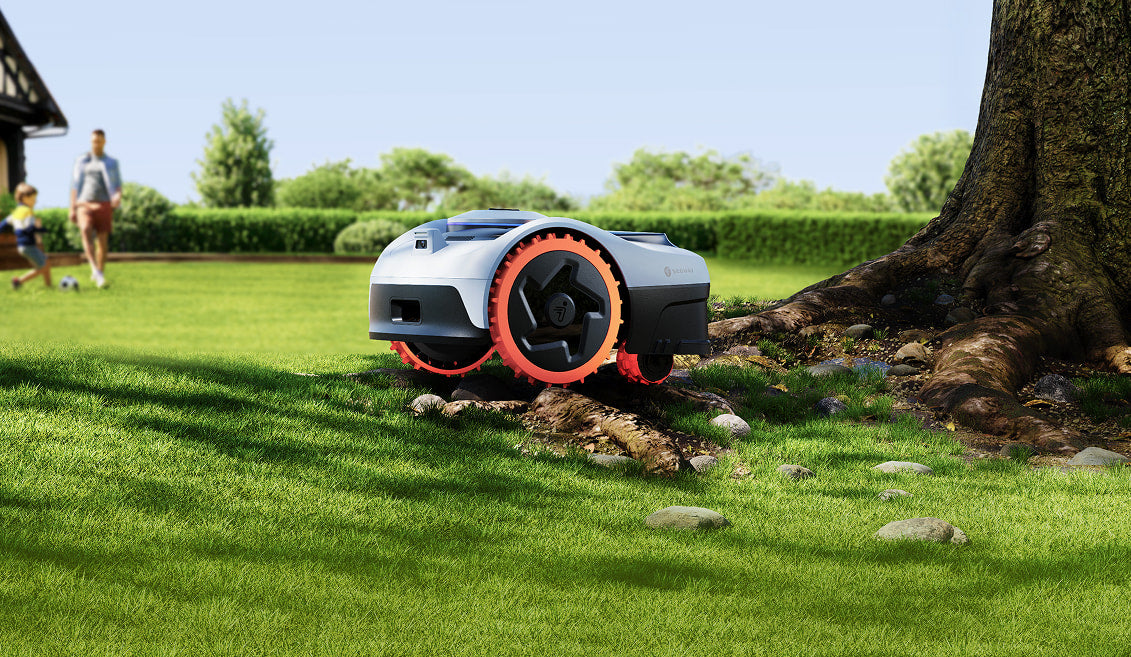
Navimow i108E
- Coverage
- ~0.2 acre (≈8,700 sq ft)
- Max slope
- ~24° (≈45%)
- AWD
- No
If your lawn is up to about an eighth of an acre and you want the simplest wire-free experience on the market, the i108E is hard to beat.
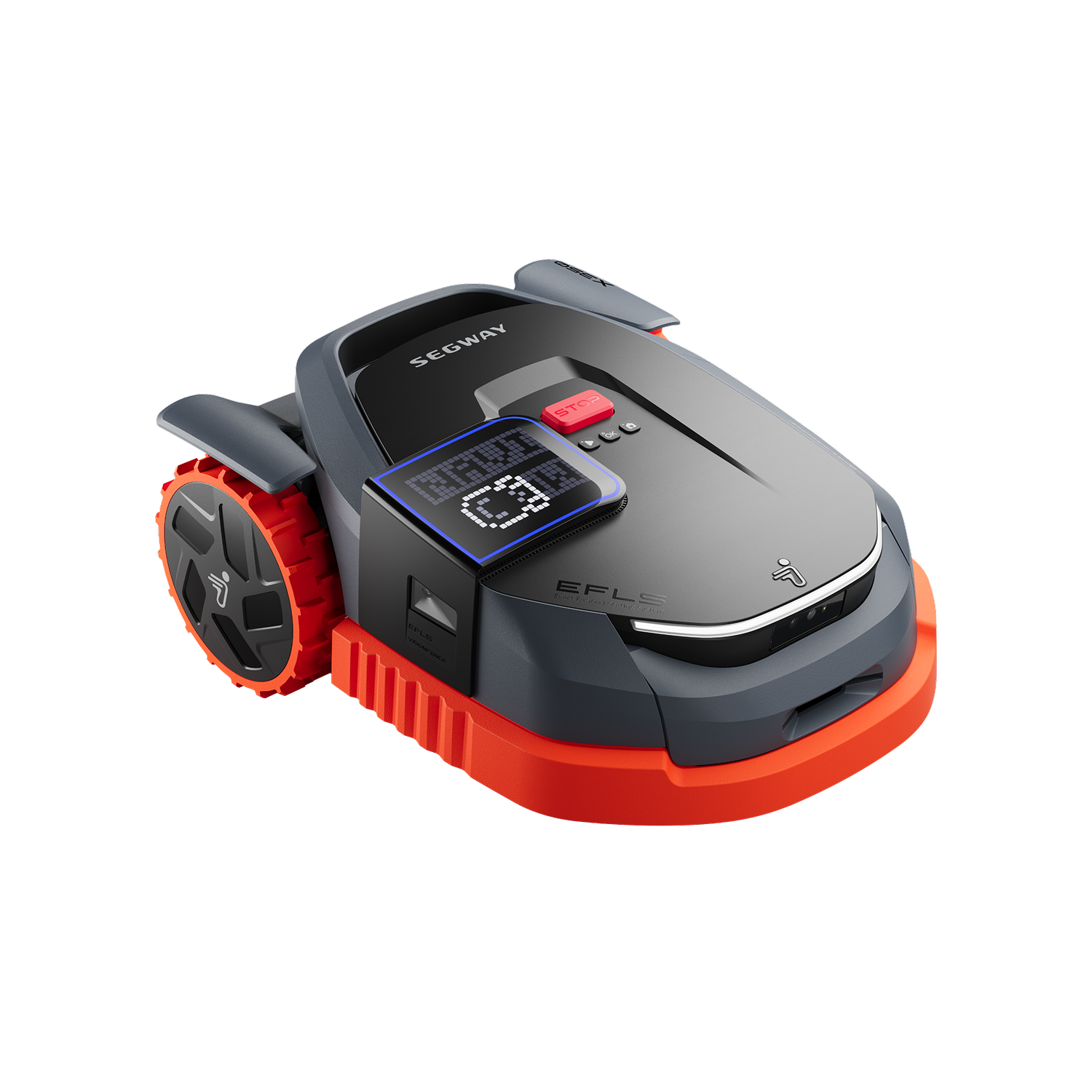
Navimow X350
- Coverage
- Up to ~1.25 acre (≈54,000 sq ft)
- Max slope
- ~45% grade
- AWD
- Yes
If you used to spend a Saturday on a ride-on, the X350 quietly finishes the same lawn overnight — wire-free, with AI mapping that actually works.
Related guides
- Robot Mower vs. Gas Mower: 5-Year Cost Comparison
Up-front cost, fuel, oil, blades, electricity, and your time — all the line items, all the math.
- Wire vs. RTK GPS vs. Vision: Which to Buy
Three navigation systems, three trade-offs. A plain-English breakdown of which one fits your yard.
- Boundary Wire vs. Wire-Free: Which Setup Is Less Hassle?
An honest head-to-head on install time, repair pain, and what happens when you re-landscape.
- See our full ranking of the best robot mowers →