Best Robot Mowers for Front and Back Yards (Multi-Zone)
When a driveway splits your lawn in two, you need a multi-zone-aware mower. Here's what to look for.
If your lawn is divided by a driveway, a sidewalk, or a substantial retaining wall, you aren't just looking for a robot mower; you’re looking for a logistical manager. Most entry-level robots are designed to bounce around a single, contiguous patch of grass. If you drop one of those in a yard split into front and back sections, it will either get stuck trying to climb the curb or spend its entire life polishing the backyard while the front yard turns into a hay field.
The short answer is that you need a robot mower with multi-zone capabilities and a "travel" logic that allows it to navigate non-grass paths. While almost every modern mower claims to handle multiple zones, the way they actually move between them—and whether they can do it autonomously—is what separates a labor-saving tool from a high-maintenance toy.
The Difference Between Logical and Physical Zones
Before you start shopping, you have to look at your driveway. Robot mowers generally categorize "multiple zones" in two ways.
First, there are logical zones. This is when your yard is all grass, but it’s shaped like a barbell. The mower can physically get from point A to point B, but you want to tell it to spend 40% of its time in the small front section and 60% in the larger back area so it doesn't over-cut one spot.
Second, and more importantly for most homeowners, are physical zones. This is where a driveway or path separates the grass. To handle a robot mower multiple zones setup here, the mower must be able to cross a "no-grow" zone (like pavement) without trying to spin its blades. If there is a gate or a fence in the way, the complexity doubles.
Boundary Wire vs. Wire-Free Navigation
The biggest divide in the industry right now is how the mower knows it has reached the next zone.
Traditional models, like the Husqvarna Automower series or the Worx Landroid, rely on a buried perimeter wire. To manage multiple zones, you have to narrow the wire into a "neck" or "corridor" across your driveway. The mower follows this wire like an invisible train track to get to the front yard. It works, but it requires cutting a small groove in your pavement or hiding the wire under a expansion joint.
The newer "wire-free" generation uses GPS (specifically RTK-GNSS) or cameras. Machines like the Segway Navimow, Mammotion LUBA, or Ecovacs Goat allow you to simply "drive" the mower via a remote control in the app to create a virtual path across your driveway. This is significantly easier to set up, but it requires a clear line of sight to the sky (for GPS) or distinct visual landmarks (for camera-based systems).
Top Contenders for Complex Yards
When recommending a robot mower multiple zones expert, I look for software that allows for distinct "tasks" per zone. You don't just want the mower to wander into the front yard; you want to schedule it to mow the front yard at 10:00 AM on Tuesdays when the cars are usually out of the driveway.
- Mammotion LUBA 2 AWD: This is currently a favorite for multi-zone setups because of its "no-go zone" and "pathway" logic. You can map out a backyard, a front yard, and a side strip, then draw a virtual line connecting them. It’s particularly good if your zones have different grass types or heights.
- Segway Navimow (i Series and H Series): Segway has some of the most intuitive software for defining transitions. If you have a sidewalk separating a "hellstrip" (that thin piece of grass between the sidewalk and the road), the Navimow handles these narrow transitions better than most.
- Husqvarna Automower (EPOS Models): If you have a larger budget and a very complex yard, Husqvarna’s professional-grade EPOS (Exact Positioning Operating System) is the gold standard. It’s "commercial-lite" tech that handles multiple zones with surgical precision, though it usually costs into the mid-to-high four figures.
- Worx Landroid: On the budget end (around the the mid-tier range mark or less), the Landroid uses "Off Limits" digital strips and "ShortCuts" to help it navigate between zones. It isn't as elegant as the GPS mowers, but for a simple driveway split, it’s a proven workhorse.
The "Driveway Problem" and Safety
The biggest hurdle for a robot mower multiple zones configuration is the surface it has to cross. If your driveway is gravel, forget about most robots. The small caster wheels will dig in, and the vibrating chassis will eventually shake something loose. You really need a solid surface like concrete, asphalt, or pavers.
Safety is the other concern. A robot crossing a driveway is a robot at risk of being run over by a distracted delivery driver or a teenager backing out of the garage.
Pro Tip: If your mower has to cross a high-traffic area, look for a model with "Scheduled Zones." This allows you to lock the mower in the backyard during peak "car movement" hours and only let it venture into the front yard or driveway area deep in the night or during the work day when the driveway is empty.
Dealing with Gates and Fences
If your backyard is fenced for a dog or privacy, a multi-zone robot mower becomes a "manual" task unless you're willing to modify your fence. You have two choices:
- The Pet Flap Method: Some owners install "doggy doors" for their mowers. Companies like Anthbot Genie or Eufy are starting to consider these accessories, but usually, it's a DIY job. You need a flap that is light enough for the mower to push through but heavy enough to stay shut.
- Manual Carry: You can always define a "Manual Zone" in the app. You pick up the mower, carry it to the front, and hit "Start." It will mow that area until the battery is low, then wait for you to carry it back to the charger. It beats pushing a mower, but it ruins the "set it and forget it" magic.
Bottom Line
If you have a split yard, don't buy the cheapest mower on the shelf; you'll regret it the first time it gets lost in the transition. Look for a wire-free RTK-GPS model if you have a clear view of the sky, as virtual paths make managing multiple zones infinitely easier than burying wires in your driveway.
Best Mowers
Read now →Mowers mentioned
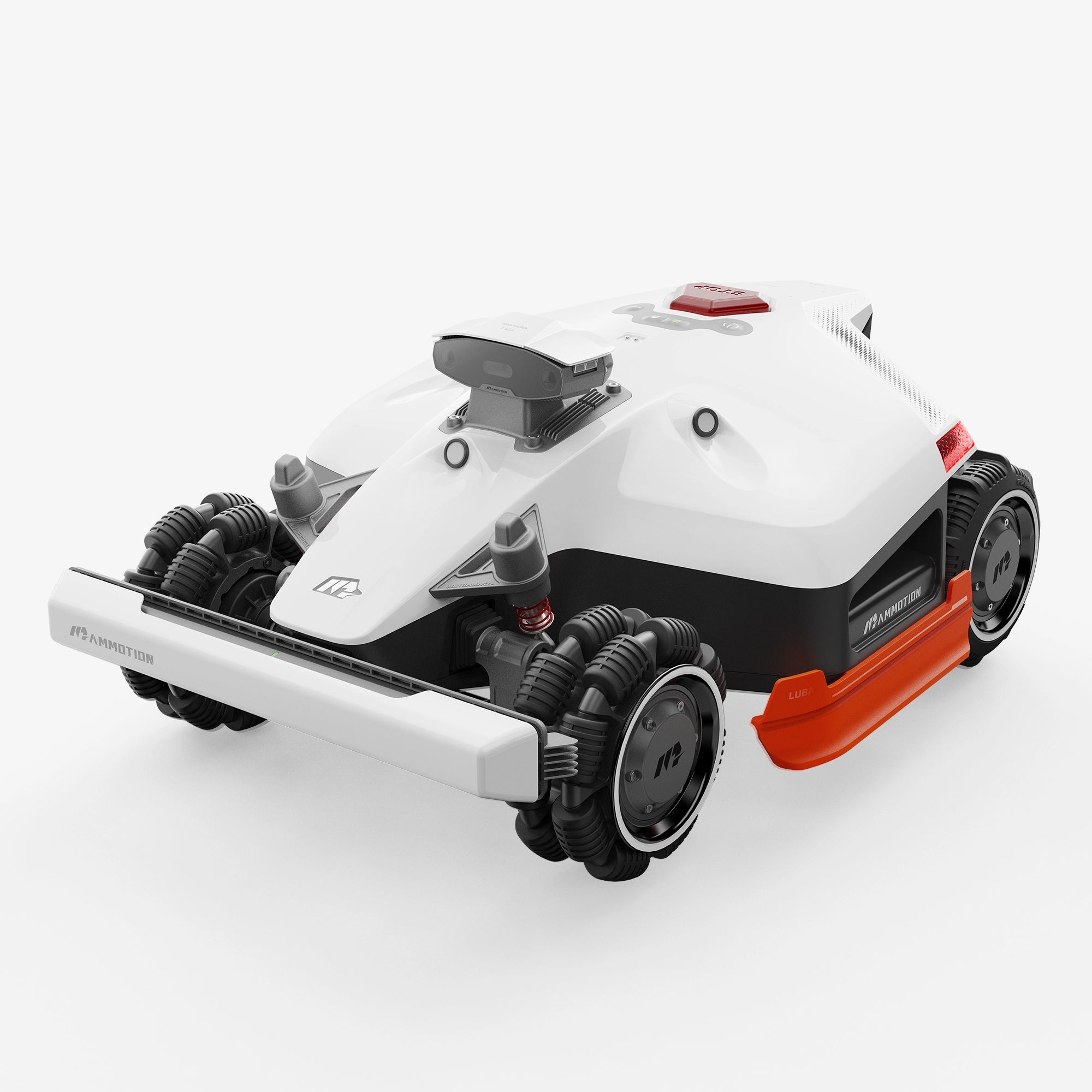
Mammotion LUBA 2 AWD 5000
- Coverage
- Up to ~1.25 acre (≈54,000 sq ft)
- Max slope
- ~38° (≈78%)
- AWD
- Yes
The LUBA 2 AWD 5000 is the wire-free mower for owners of a full acre with hills. Few competitors combine that coverage with serious slope rating.
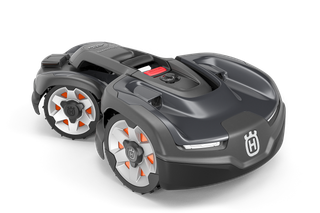
Husqvarna Automower 415X
- Coverage
- ~0.4 acre (≈17,000 sq ft)
- Max slope
- ~22° (≈40%)
- AWD
- No
Boring in the best way. Husqvarna's 415X has been polished over a decade of Automower releases — set it up once and it runs for years.
Related guides
- How Do Robot Lawn Mowers Work? Plain-English Guide
A neutral, jargon-free walkthrough of what's actually going on inside the dock, on the lawn, and in the app.
- Are Robot Lawn Mowers Worth It? 2026 Cost Breakdown
Five-year math against a gas mower and a lawn service — with real American pricing, not press-release numbers.
- Best Robot Mowers for Steep & Sloped Yards (AWD Explained)
Slope percent vs. degree, why AWD matters, and which mowers actually keep their grip on real American hill yards.
- See our full ranking of the best robot mowers →