Do Robot Mowers Help With Lawn Health? (Mulching Benefits)
The agronomy case for mowing little and often — and the seasons when it backfires.
The short answer is a resounding yes, but not for the reasons most people think. It isn't about the robot being "smarter" than a human on a riding mower; it’s about the frequency of the cut. While a traditional lawn service might visit once a week—hacking off three inches of growth in one stressful event—a robot mower maintainer nibbles away at the grass every single day.
This "little and often" approach transforms your lawn from a stressed-out ecosystem into a dense, carpet-like turf. By constantly recirculating nutrients through specialized mulching, robot mowers act like a slow-release fertilizer system that never turns off. However, there are specific seasonal trade-offs and maintenance habits you need to know to make sure the machine is actually helping rather than hurting.
The Science of the "Little and Often" Cut
When you use a traditional mower, you’re likely breaking the "one-third rule." Agronomists generally agree that you should never remove more than one-third of the grass blade at once. Removing more shocks the plant, forcing it to divert energy from root development to leaf repair.
A robot mower, like a Husqvarna Automower or a Segway Navimow, avoids this stress entirely. Because it runs daily (or every other day), it only ever removes a few millimeters of growth. This consistent clipping encourages the grass to grow laterally rather than vertically. This leads to "tillering"—the process where the grass plant produces new shoots from the base. The result is a thicker lawn that naturally crowds out weeds like crabgrass and dandelions without the need for heavy herbicides.
Why Robot Mower Mulching is Superior
Most gas mowers claim to mulch, but they often leave behind "clumpers"—heavy wet piles of grass that smother the turf beneath them. Robot mowers are designed exclusively for mulching. Because the clippings are so tiny, they don't sit on top of the grass; they fall between the blades straight to the soil surface.
This is where the real robot mower lawn health mulching benefits kick in. These micro-clippings are roughly 80% water and 20% nitrogen, phosphorus, and potassium. As they decompose rapidly, they return these nutrients to the soil. Over a full growing season, this natural recycling can account for up to 25% of your lawn’s total fertilizer needs. You aren't just cutting the grass; you're feeding it every time the mower leaves the charging station.
Better Soil Health through Weight Reduction
One of the most overlooked benefits of switching to a robot is the lack of soil compaction. A standard zero-turn mower can weigh anywhere from 500 to 1,200 pounds, plus the weight of the operator. Repeatedly driving that weight over your yard squeezes the air pockets out of the soil, making it harder for roots to breathe and water to penetrate.
By contrast, even a heavy-duty AWD model like the Mammotion LUBA 2 weighs less than 50 pounds. Most residential models from brands like Worx or Eufy are even lighter. This "light footprint" philosophy prevents the soil from turning into a parking lot. Better soil aeration leads to deeper root systems, which means your lawn will stay green longer during a mid-August drought while your neighbor's yard turns brown.
When the Frequency Backfires: Proper Maintenance
While the "little and often" approach is generally superior, it requires you to be diligent about blade health. Because a robot mower uses small, razor-like blades rather than one heavy, spinning steel bar, those blades dull faster.
A dull blade doesn't cut grass; it tears it. Tattered grass tips turn brown and leave the plant vulnerable to fungal diseases.
If you want to maximize robot mower lawn health mulching, you have to commit to changing the blades every 4 to 8 weeks depending on your lawn size. Most flagship models from Ecovacs or Anthbot make this a five-minute job with a screwdriver, but it’s a step many owners skip. If you see "white" or "frayed" tips on your grass, your blades are dull and you're actively hurting the health of your turf.
Seasonal Considerations and "The Thatch Myth"
A common concern is that constant mulching will lead to thatch buildup. Thatch is a layer of organic debris that sits between the green vegetation and the soil surface. However, thatch is primarily made of lignin-heavy roots and stems, not the soft leaf tissue produced by daily mowing.
In fact, the robot mower lawn health mulching process can actually help break down thatch. The nitrogen in the tiny clippings feeds the microbes that decompose thatch.
The only time you should be wary is during the "Big Spring Flush"—that period in May or June when grass grows at an explosive rate. If you have any connectivity issues or the robot gets stuck for a few days during this period, the grass may get too tall for the robot to mulch effectively. In these rare cases, you might need to "reset" the lawn with a traditional mower or set the robot's cutting height to its maximum and gradually lower it over several days.
Choosing the Right Tech for Lawn Health
Not all robots are created equal when it comes to turf quality.
- Random Path Mowers: (Like basic Worx Landroid or older Husqvarna models) These provide a very "even" look because they hit the grass from every possible angle, but they spend more time "on" the grass, which can lead to slight wear patterns near the boundary wire.
- Systematic Mowers: (Like the Segway Navimow, EcoFlow Blade, or Mammotion LUBA) These cut in straight, efficient lines. This reduces the "time on turf," further minimizing any potential wear and tear on the grass blades.
Bottom Line
Robot mowers are more than just a convenience; they are arguably the best tool for achieving professional-grade turf. By prioritizing consistent micro-cuts over the "slash and burn" weekly schedule, you'll see a thicker, greener lawn that requires significantly less water and fertilizer. Once you get past the initial setup, the grass essentially takes care of itself.
Buying Guide
Read now →Mowers mentioned
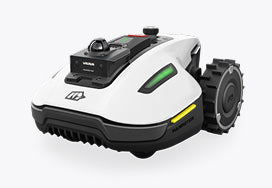
Mammotion YUKA 2000
- Coverage
- ~0.5 acre (≈22,000 sq ft)
- Max slope
- ~27° (≈50%)
- AWD
- No
The YUKA 2000 reads more like a robotic groundskeeper than a mower. Dual discs plus a clipping sweeper give it the cleanest finish in the wire-free class.
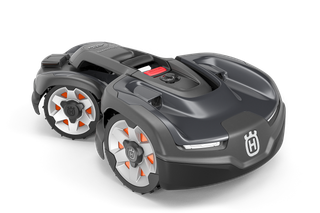
Husqvarna Automower 415X
- Coverage
- ~0.4 acre (≈17,000 sq ft)
- Max slope
- ~22° (≈40%)
- AWD
- No
Boring in the best way. Husqvarna's 415X has been polished over a decade of Automower releases — set it up once and it runs for years.
Related guides
- Can Robot Mowers Handle Wet Grass? What Actually Happens
The honest answer the manufacturer pages skip — including what wet grass does to blades, decks, and your stripes.
- Do You Still Need to Edge With a Robot Mower?
Why there's a strip near your fence the mower never seems to touch — and the three ways to fix it.
- Why Is My Robot Mower Leaving Uncut Patches? (Fixes)
Six causes, ranked from most to least common — and the diagnostic steps to find which one is yours.
- See our full ranking of the best robot mowers →