Do Robot Mowers Work on Bermuda / Zoysia / St. Augustine?
How three of the most common American warm-season grasses respond to little-and-often mulching.
Standard cool-season grasses like Fescue or Kentucky Bluegrass are the "easy mode" for robotic mowers. They grow vertically, they’re relatively soft, and they don’t put up much of a fight. But if you live in the Sunbelt, you’re dealing with a different beast entirely. Bermuda, Zoysia, and St. Augustine are thick, aggressive, and can become incredibly dense. If you’re wondering if a robot mower can handle these southern staples, the short answer is yes—but the "how" matters more than the "if."
The secret to success with a robot mower Bermuda grass setup isn't raw horsepower; it’s frequency. Because these grasses spread via stolons and rhizomes to create a thick mat, traditional gas mowers often struggle with bagging or clumps. Robots solve this by cutting just a few millimeters every single day. Instead of a weekly "haircut" that stresses the plant, the robot keeps the lawn in a state of constant equilibrium.
The Challenge of Thick Southern Turf
The primary hurdle for any robot mower in the South is resistance. High-quality Zoysia, for instance, is famously dense—some say it’s like trying to mow a Persian rug. While a Husqvarna Automower or a Segway Navimow uses razor-sharp, pivoting blades that are incredibly efficient, they don't have the same "thumping" torque of a 160cc Honda engine.
If you let your Bermuda or St. Augustine get out of control for two weeks, a robot will likely struggle to push through the thatch. However, once the robot establishes a baseline height, it actually performs better than a manual mower. By "mulching" tiny snips of grass back into the soil daily, the robot provides a constant source of nitrogen, which these hungry warm-season grasses crave.
St. Augustine: The Height of Cut Dilemma
St. Augustine is the outlier of the southern trio. Unlike Bermuda, which loves to be kept short, St. Augustine thrives when it’s left between 3 and 4 inches tall. This is where many entry-level robots fail.
Most "global" robot mowers are designed for European markets where grass is typically kept under 2.5 inches. If you buy a standard budget model, you might find it "scalps" your St. Augustine, leaving it vulnerable to disease and pests. If you have this grass type, you need to look specifically for "H" models (High cut). The Husqvarna 430XH or 450XH, for example, are specifically geared for the American market with cutting heights reaching up to 3.6 inches. Similarly, the Mammotion LUBA 2 AWD offers high-cut versions that can handle the shaggier requirements of a Florida or Texas lawn.
Bermuda and Zoysia: The Low-Profile Specialists
Bermuda grass is perhaps the best candidate for robotic mowing. It handles heat like a champ and prefers being kept short—often between 1 and 2 inches. Because a robot mower Bermuda grass routine involves daily trimming, it encourages the grass to grow "out" rather than "up," leading to a carpet-like density that neighbors will envy.
Zoysia is similar but more temperamental. It grows more slowly than Bermuda, but it is much tougher. For Zoysia, blade sharpness is everything. Because the blades on robots like the Worx Landroid or the Eufy S1 Pro are small and inexpensive, you should plan on rotating or replacing them more frequently than a guy in Ohio with a Fescue lawn would. If the blades dull, they will tear the Zoysia rather than slicing it, leading to brown, frayed tips.
Dealing with Thatch and Aerial Runners
One quirk of southern grasses is their tendency to produce "runners." In a healthy St. Augustine or Bermuda lawn, these stolons stay low. But if the lawn gets stressed or underwatered, they can loop up.
Standard robot mowers are very light. While this is great for not leaving ruts in your yard, it means they don't always "crush" the runners down into the soil. Some owners find they need to do a "reset" mow with a heavy gas mower once a year in the spring to scalp the lawn and manage thatch buildup. Once that spring maintenance is done, the robot can take over for the rest of the growing season.
Pro Tip: If your lawn is particularly bumpy—which is common with the thick, uneven growth of St. Augustine—look for a mower with a floating deck. Models like the Anthbot Genie or the Ecovacs Goat G1 have cutting assemblies that move up and down with the terrain, preventing the blades from "digging in" when the robot hits a localized mound of thick turf.
Navigation and Traction in the Humid South
Southern lawns aren't just thick; they are often damp. High humidity and morning dew can turn a dense Zoysia lawn into a slippery slide. If your yard has any degree of slope, traction becomes your biggest bottleneck.
While many homeowners are moving toward "wire-free" systems like the Segway Navimow or the EcoFlow Blade to avoid digging trenches, you need to ensure the tires can handle the friction. All-wheel-drive models, like the Mammotion LUBA 2, have become popular in the South because they use four-way traction to claw through thick St. Augustine and maintain a straight line even when the grass is slick.
Bottom Line
Robot mowers are actually better for Bermuda and Zoysia than traditional mowers because they favor the "little and often" approach that these grasses prefer. Just be sure to verify the maximum cutting height if you have St. Augustine, and be prepared to swap your blades every 4–6 weeks to keep up with the density of southern turf.
Buying Guide
Read now →Mowers mentioned
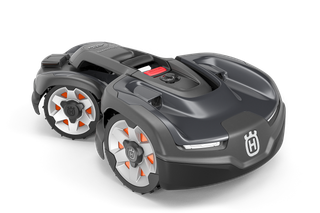
Husqvarna Automower 415X
- Coverage
- ~0.4 acre (≈17,000 sq ft)
- Max slope
- ~22° (≈40%)
- AWD
- No
Boring in the best way. Husqvarna's 415X has been polished over a decade of Automower releases — set it up once and it runs for years.
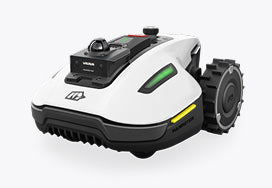
Mammotion YUKA 2000
- Coverage
- ~0.5 acre (≈22,000 sq ft)
- Max slope
- ~27° (≈50%)
- AWD
- No
The YUKA 2000 reads more like a robotic groundskeeper than a mower. Dual discs plus a clipping sweeper give it the cleanest finish in the wire-free class.
Related guides
- Can Robot Mowers Handle Wet Grass? What Actually Happens
The honest answer the manufacturer pages skip — including what wet grass does to blades, decks, and your stripes.
- Do You Still Need to Edge With a Robot Mower?
Why there's a strip near your fence the mower never seems to touch — and the three ways to fix it.
- Why Is My Robot Mower Leaving Uncut Patches? (Fixes)
Six causes, ranked from most to least common — and the diagnostic steps to find which one is yours.
- See our full ranking of the best robot mowers →